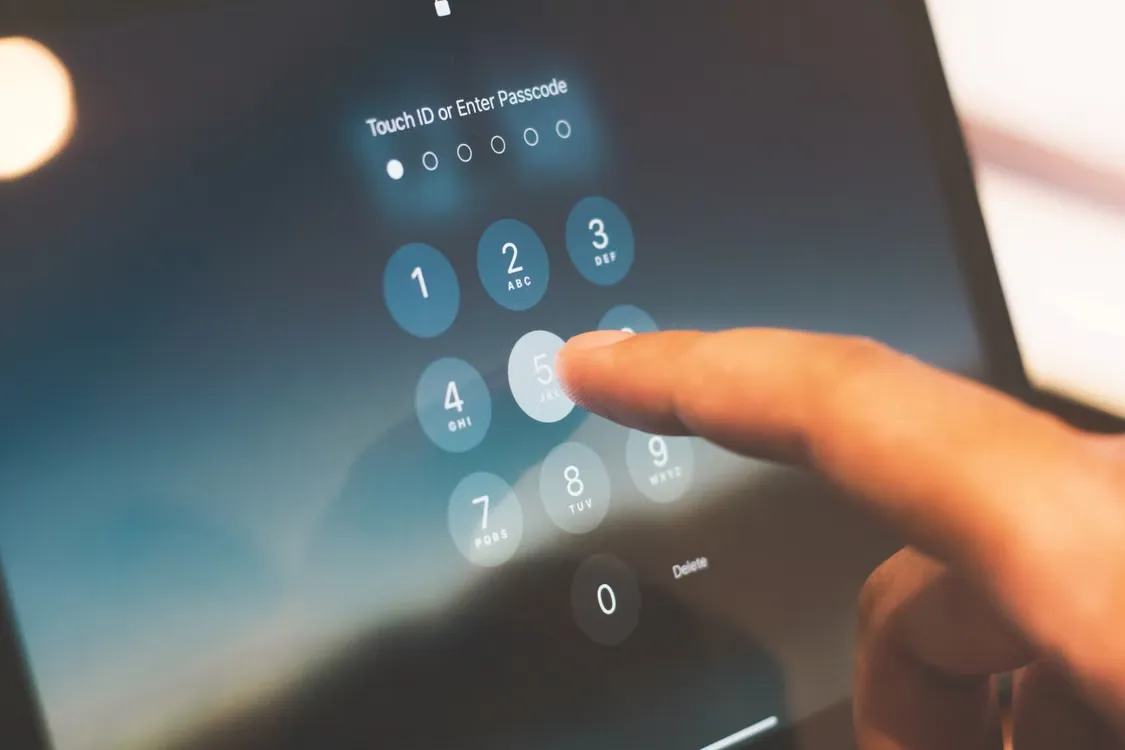
Apple publishes two numbers that are easy to compare, and it shows. The chance that a random person unlocks your phone with Face ID is about 1 in 1,000,000. For Touch ID it is about 1 in 50,000. Divide one by the other and you get twenty, which is where the headline comes from. The figures describe a single enrolled face or finger and a random stranger, measured by the maker. They are not a guarantee for every phone on the market, but they explain why banks and app developers treat a good face scan as a strong everyday lock.
That shift matters most where an account sits behind a screen you touch dozens of times a day. Online services have learned that a sign-in people can finish in a second gets used, while a clumsy one gets skipped. The sankra login page is a good example of an account area built around that idea, with a clean layout and a sign-in that feels at home on a phone, so getting back into your profile takes very little effort. For anyone who enjoys sport, games or digital leisure on the move, that smooth entry is part of what makes a platform feel well thought out and easy to return to.
How a Phone Decides Two Faces Are Different
Face ID does not compare photographs. An infrared projector casts more than 30,000 invisible dots onto your face, and a sensor reads how they bend across the nose, cheeks and brow. The phone turns that depth map into a mathematical template and stores it in a protected chip, never in a cloud. The template is also updated quietly as your face changes, so a new beard or a gradual change in weight rarely forces a fresh setup.
A photo or a screen has no depth, so it fails, and so does a printed mask without the right heat and shape. A fingerprint sensor, by contrast, reads a flat pattern of ridges from a small patch of skin, and a small patch simply contains less distinguishing detail than a whole face.
Where the Twenty Times Gap Comes From
Fewer distinguishing points mean more accidental overlaps, much like two short words sharing letters more often than two long sentences do. A partial print from a small sensor offers perhaps a few dozen usable ridge features, while a depth map of a face offers thousands of measurements. More data lets the system set a stricter threshold without rejecting you too often. In practice that means the phone can demand a very close match from the face, and still recognise you on a sleepy morning, in a dim hallway or from a slightly tilted angle, which a small fingerprint patch struggles to do as reliably.
Here is how the two methods compare on the figures their makers publish
|
Method |
Published false match rate |
Typical reason for a miss |
|
Face ID |
Roughly one chance in a million |
Heavy occlusion, sunglasses on older models |
|
Touch ID |
About 1 in 50,000 |
Wet or dry fingers, worn ridges |
|
Four digit PIN |
1 in 10,000 per guess |
Guessable dates and patterns |
The Exceptions Worth Knowing
Apple itself notes that the odds change for identical twins and for children under 13, whose features are still developing. In those cases a false match is more plausible, and a passcode is the safer choice. Fingerprint readers have their own quirks. Ultrasonic sensors on some Android phones read depth in the skin and perform better than older optical ones, so the brand and sensor type matter as much as the category.
Consider a realistic morning. You hold the phone at an angle over a coffee, and Face ID fails because half your face is out of frame. The phone offers a second try, then the passcode. Failure costs you three seconds, and a stranger gets nothing. That is the trade that designers accepted. They would reject the owner now and then rather than admit the wrong person, and most users barely notice the occasional retry, since the phone usually recovers on the very next attempt. Three habits keep either method working well.
-
Enroll in normal light and again with glasses if you wear them.
-
Clean the sensor or camera window every few days.
-
Set a long passcode as the fallback, not a short number.
What the Number Does Not Tell You
A false match rate measures chance, not determination. A motivated attacker with your phone, a cast of your finger or your cooperation under pressure is a different problem. Still, for the everyday case of a lost phone found by a stranger, a one in a million barrier is very strong, and it is the reason most people now authenticate dozens of times a day without thinking about it.
The practical lesson is modest. Treat the twenty times figure as a sign that face scanning is a sturdy first line of defence, then pair it with a strong passcode, current software and a phone that you update regularly. Together those small choices matter more than any single sensor, and they cost nothing beyond a few minutes in the settings menu. Most of these settings sit together in one menu, easy to find.