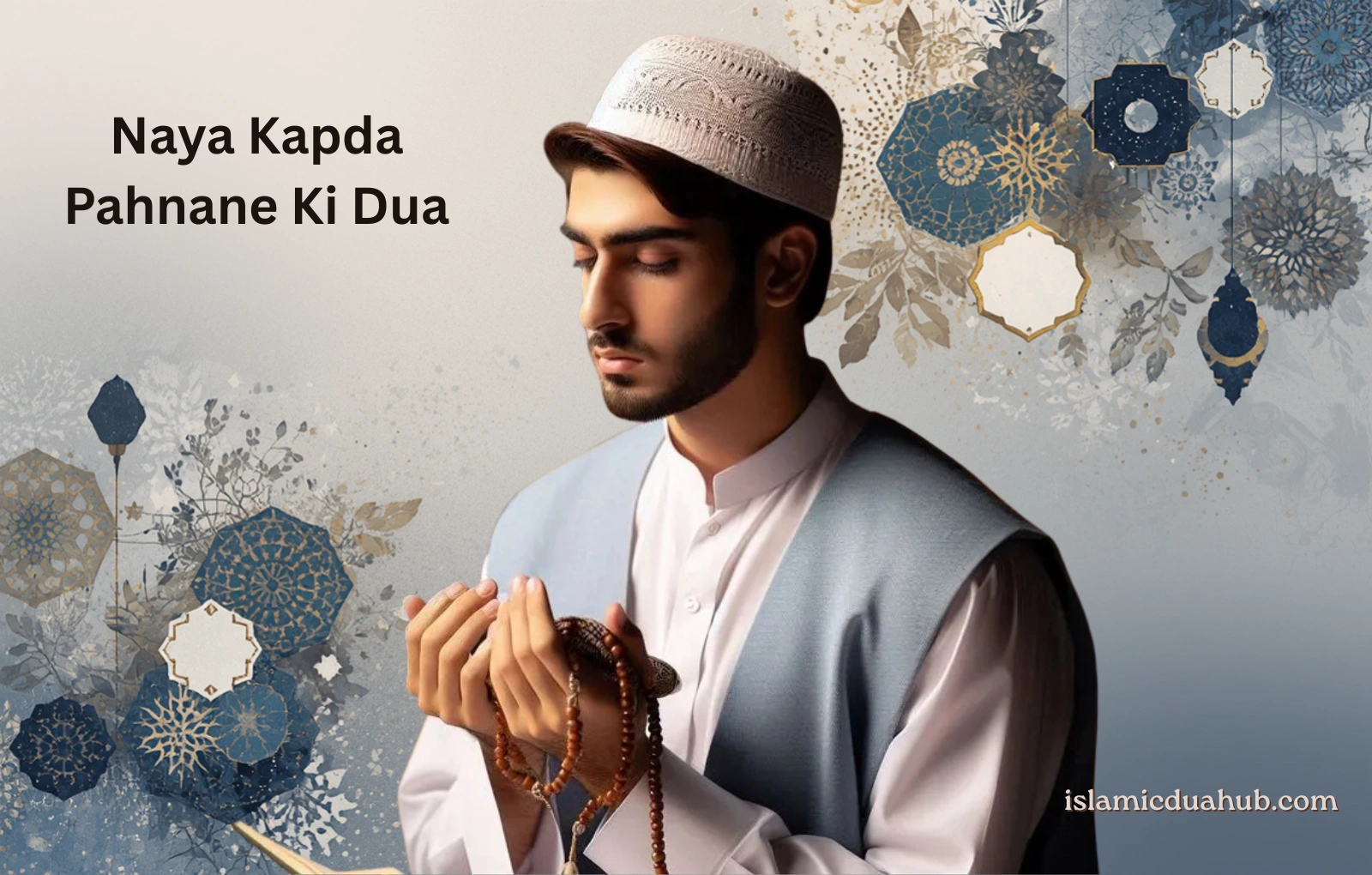
Every time a Muslim wears a new garment, Islam has prescribed a special supplication for that moment. This dua is an expression of gratitude to Allah for blessing us with clothing, and it is a request for the garment to bring goodness and protection from harm.
Naya Kapda Pahnane Ki Dua the dua for wearing new clothes is one of the many beautiful supplications taught by the Prophet Muhammad (peace be upon him) for everyday actions. It turns a simple, ordinary act into an act of worship.
Clothing is a great blessing from Allah. It covers our bodies, protects us from the elements, and preserves our modesty and dignity. When we acknowledge this blessing through dua at the moment of wearing new clothes, we strengthen our connection with Allah and invite His barakah (blessings) into our lives.
Naya Kapda Pahnane Ki Dua in Arabic
اللَّهُمَّ لَكَ الْحَمْدُ أَنْتَ كَسَوْتَنِيهِ أَسْأَلُكَ مِنْ خَيْرِهِ وَخَيْرِ مَا صُنِعَ لَهُ وَأَعُوذُ بِكَ مِنْ شَرِّهِ وَشَرِّ مَا صُنِعَ لَهُ
Naya Kapda Pahnane Ki Dua Transliteration
Allahumma lakal hamdu anta kasawtanihi, as’aluka min khayrihi wa khayri ma suni’a lahu, wa a’udhu bika min sharrihi wa sharri ma suni’a lahu.
Naya Kapda Pahnane Ki Dua in English (Meaning)
“O Allah, all praise is for You. You have clothed me with this garment. I ask You for its goodness and the goodness of what it was made for. And I seek Your protection from its evil and the evil of what it was made for.”
Naya Kapda Pahnane Ki Dua In Hindi
हिंदी में: अल्लाहुम्मा लक अल-हम्दु, अंता कसौतनीहि, अस्अलुका मिन खैरिही व खैरि मा सुनीआ लहू, व अऊजु बिक मिन शर्रिही व शर्रि मा सुनीआ लहू।
हिंदी अनुवाद (मतलब): ऐ अल्लाह! सारी तारीफ़ें तेरे लिए हैं। तूने ही मुझे यह (कपड़ा) पहनाया है। मैं तुझसे इसके भले की और उस भले की माँग करता हूँ जिसके लिए इसे बनाया गया है, और मैं तेरी पनाह माँगता हूँ इसके बुरे से और उस बुरे से जिसके लिए इसे बनाया गया है।
Hadith Reference
This dua is narrated by Abu Sa’eed al-Khudri (may Allah be pleased with him). He reported that whenever the Prophet Muhammad (peace be upon him) wore a new garment whether a turban, a shirt, or a cloak he would mention the name of that garment and then recite this supplication.
This hadith is recorded in:
- Sunan Abu Dawud (Hadith No. 4020)
- Jami’ at-Tirmidhi
Both are among the most reliable collections of hadith in Islam, which confirms that this Kapda Pahnane Ki Dua is authentic and well-established in Islamic tradition.
Explanation of the Dua
This short supplication carries profound meaning within just a few words. It is divided into two parts:
Part One — Gratitude and Praise
The dua begins with “Allahumma lakal hamd” “O Allah, all praise is for You.” This opening is a declaration that every blessing, including the clothes on our bodies, comes from Allah alone. It is an acknowledgment of complete dependence on Him.
Then comes “anta kasawtanihi” “You have clothed me with this garment.” By saying this, the servant credits Allah directly for the blessing of this new clothing, rather than attributing it to his own effort, wealth, or status.
Part Two — Seeking Goodness and Protection
The second half of the dua contains two requests:
1. Asking for Goodness: “As’aluka min khayrihi wa khayri ma suni’a lahu” “I ask You for its goodness and the goodness of what it was made for.”
This means asking Allah to make the garment a source of benefit that it may serve its true purpose, which is to cover the body with modesty and dignity. It is also a prayer that the garment brings barakah, comfort, and good to the one wearing it.
2. Seeking Protection from Harm: “Wa a’udhu bika min sharrihi wa sharri ma suni’a lahu” “I seek Your protection from its evil and the evil of what it was made for.”
Clothing can sometimes become a means of arrogance, showing off, or other spiritual harms. This part of the dua is a request to Allah to protect the wearer from such dangers. It is a reminder that even something as ordinary as clothing can have both good and harmful dimensions.
Disclaimer: The duas and Islamic information provided in this article are sourced from well-known hadith collections and widely accepted Islamic references. This content is shared for general educational and informational purposes only.
When to Read Naya Kapda Pahnane Ki Dua
This dua is specifically for new clothes being worn for the first time. It should be recited in the following situations:
- When wearing a brand-new shirt, kurta, dress, or any new garment for the first time
- When wearing new clothes for Eid, a wedding, or any special occasion
- When someone receives new clothing as a gift and wears it
- When a child is dressed in new clothes for the first time
This dua is not required every single time you put on the same garment. It is meant for the first time a new piece of clothing is worn. For everyday dressing, saying “Bismillah” is sufficient.
The Sunnah Way of Wearing Clothes
Along with reciting the Naya Kapda Pahnane Ki Dua, Islam teaches a complete etiquette for wearing clothes:
1. Start from the Right Side: The Prophet (peace be upon him) always started from the right side when wearing clothes. When putting on a shirt or kurta, insert the right arm first. When wearing trousers or pants, put the right leg in first.
2. Remove from the Left Side: When taking clothes off, begin from the left side the opposite of how you put them on.
3. Recite the Dua: Say the Naya Kapda Pahnane Ki Dua while wearing new clothes or immediately after putting them on.
4. Say Alhamdulillah: Expressing gratitude verbally saying “Alhamdulillah” when receiving new clothes is also a beautiful Islamic practice.
5. Avoid Arrogance: Islam strongly discourages wearing clothes out of pride or to show off. The purpose of clothing is modesty, not display.
Dua for Congratulating Someone on New Clothes
When you see someone wearing new clothes, there is a Sunnah dua to say to them as a form of congratulations and blessing:
Arabic:
تُبْلِي وَيُخْلِفُ اللَّهُ تَعَالَى
Transliteration: Tubli wa yukhliful-lahu ta’ala
Meaning: “May you wear it out, and may Allah replace it with something new.“
This is a warm and beautiful sunnah. Instead of simply saying “congratulations,” this dua carries a prayer that the garment lasts long and that Allah continues to bless the person with new provisions.
Benefits of Reading Naya Kapda Pahnane Ki Dua
1. Expressing Gratitude to Allah
Clothing is a gift from Allah. By reciting this dua, you acknowledge that gift directly, and gratitude to Allah brings more blessings. Allah says in the Quran: “If you are grateful, I will surely increase you in favor.” (Ibrahim: 7)
2. Protection from Spiritual Harms
New clothes can sometimes lead to pride, vanity, or showing off. This dua acts as a spiritual shield, asking Allah to protect you from these internal dangers.
3. Turning Everyday Actions into Worship
One of the most profound aspects of Islam is that ordinary daily acts eating, sleeping, dressing can all become acts of worship when done with the right intention and the remembrance of Allah. Reciting this dua transforms the simple act of wearing clothes into an ibadah (act of worship).
4. Strengthening Tawakkul (Reliance on Allah)
By saying “You have clothed me,” the believer affirms that everything comes from Allah. This strengthens tawakkul the heart’s complete reliance on and trust in Allah.
5. Keeping the Heart Humble
When a person wears beautiful or expensive clothes, the heart can become proud. This dua keeps the heart humble by reminding the wearer that these clothes are a blessing from Allah, not a result of one’s own greatness.
What If You Forget to Read the Dua?
If you forget to recite the Kapda Pahnane Ki Dua when first putting on a new garment, there is no sin involved. Islam is a religion of ease and mercy. Simply recite the dua whenever you remember it. The important thing is to make it a habit going forward, so that over time it becomes a natural part of how you wear new clothes.
Read Also: Masjid Se Nikalne Ki Dua
Conclusion
Naya Kapda Pahnane Ki Dua is a short, simple, and deeply meaningful supplication that every Muslim should know and practice. It takes only a few seconds to recite but brings immense spiritual value gratitude, humility, protection from arrogance, and the transformation of an everyday act into an act of worship.
Islam has beautifully provided guidance for every aspect of life, including the clothes we wear. By memorizing this dua and making it a daily habit, we follow the Sunnah of the Prophet (peace be upon him) and keep our hearts connected to Allah in all moments big and small.
The next time you put on a new garment, pause for a moment, recite this dua with sincerity, and feel the peace that comes from turning even the simplest act into worship. May Allah accept our duas, bless us with good in what we wear, and protect us from every harm. Ameen.
Frequently Asked Questions
Q1: What is Naya Kapda Pahnane Ki Dua?
A dua recited when wearing new clothes to thank Allah and ask for the garment’s goodness.
Q2: Is this dua found in Hadith?
Yes. It is recorded in Sunan Abu Dawud (Hadith No. 4020) and Jami’ at-Tirmidhi.
Q3: When should this dua be read?
When wearing any new garment for the very first time.
Q4: Should it be read every time you wear clothes?
No. It is only for new clothes. For everyday dressing, saying “Bismillah” is enough.
Q5: What does this dua mean in English?
“O Allah, all praise is for You. You clothed me with this. I ask for its goodness and seek protection from its harm.”
Q6: Which side should you start from when wearing clothes?
Start from the right side when wearing and from the left side when removing.
Q7: What do you say to someone wearing new clothes?
Say: “Tubli wa yukhliful-lahu ta’ala” “May you wear it out and may Allah replace it.”
Q8: Must the dua be memorized in Arabic?
Arabic is preferred, but reciting it with understanding of the meaning is also acceptable.
Q9: Can children be taught this dua?
Yes. Teaching it to children early is a great habit to build.
Q10: Should the dua be read if new clothes are a gift?
Yes. It applies to any new garment worn for the first time, gifted or purchased.
Written by: Ahmad Raza
Credentials: Islamic Studies Content Writer
 Read More duas for daily life at The Dua For You