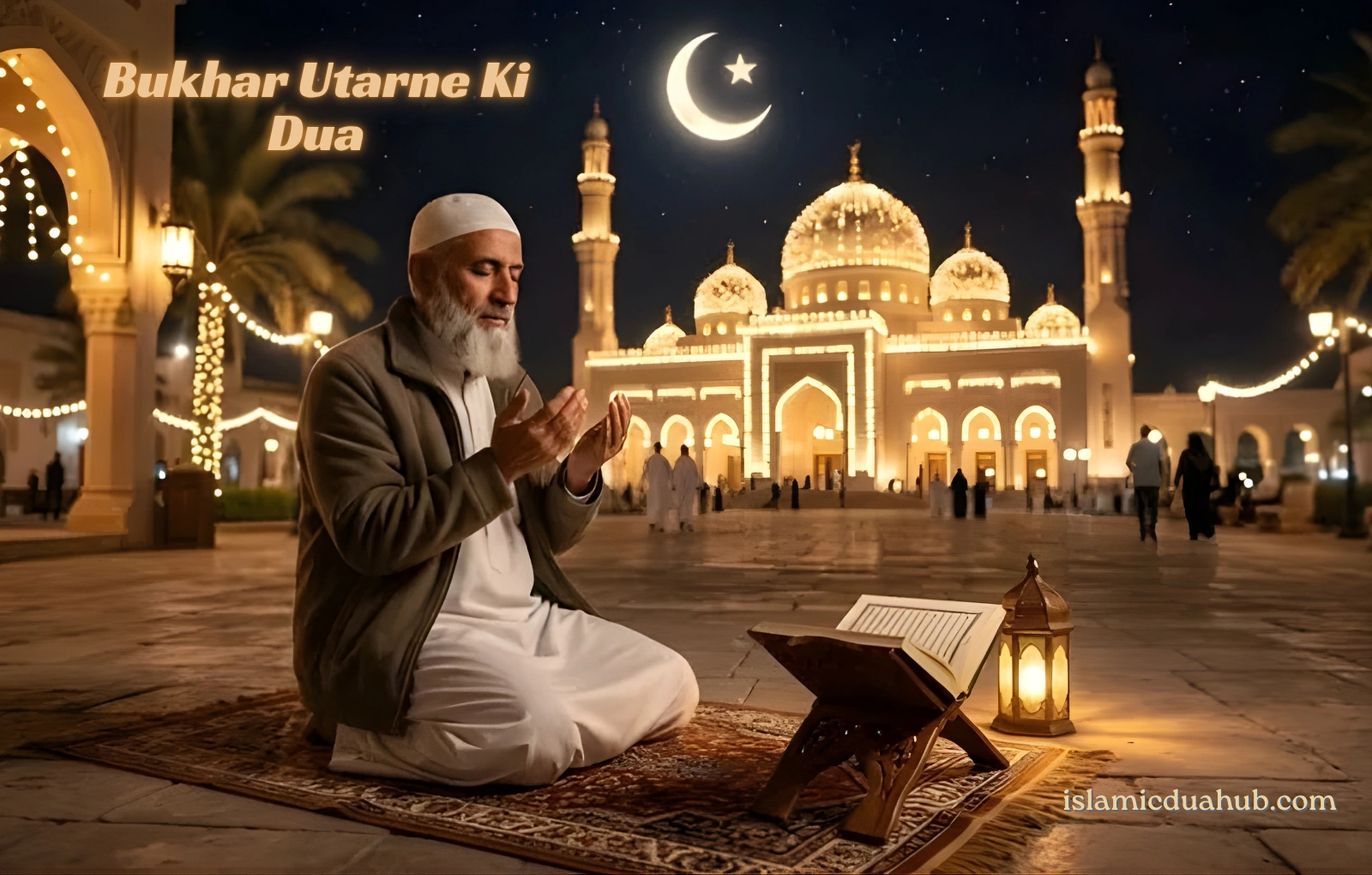
Fever is one of the most common forms of physical suffering. It weakens the body, causes discomfort, and often leaves a person helpless. In Islam, illness is considered a test from Allah, and during such times, a Muslim is encouraged to turn toward Allah with full trust and sincerity.
Bukhar Utarne Ki Dua refers to the Islamic supplications recited during fever to seek relief and healing from Allah. These duas are taken from authentic Hadith and the Quran, and they were taught and practiced by the Prophet Muhammad ﷺ himself.
Islam does not separate the physical from the spiritual. Seeking medical treatment and making dua together is the complete Islamic approach to illness. The Prophet ﷺ said:
“Make use of medical treatment, for Allah has not made a disease without appointing a remedy for it.”
So alongside medicine, reciting Bukhar Utarne Ki Dua is a powerful act of worship and reliance on Allah.
Bukhar Utarne Ki Dua in Arabic
The following dua is recorded in Sunan Abu Dawood and Jami’ at-Tirmidhi. It was narrated by Ibn Abbas رضی اللہ عنہ that the Prophet ﷺ instructed reciting this dua during fever:
Arabic Text:
بِسْمِ اللَّهِ الْكَبِيرِ، أَعُوذُ بِاللَّهِ الْعَظِيمِ، مِنْ شَرِّ كُلِّ عِرْقٍ نَعَّارٍ، وَمِنْ شَرِّ حَرِّ النَّارِ
Transliteration
Bismillahil Kabeer, A’oodhu Billahil Azeem, Min Sharri Kulli Irqin Na’aarin, Wa Min Sharri Harrin Naar
Bukhar Utarne Ki Dua Meaning in English
“In the name of Allah, the Great. I seek refuge in Allah, the Magnificent, from the evil of every throbbing vein and from the evil of the heat of the Fire (fever).”
Bukhar Utarne Ki Dua in Urdu
اردو ترجمہ:
“اللہ کے بڑے نام سے شروع کرتا ہوں، میں اللہ عظیم کی پناہ مانگتا ہوں، ہر اس رگ کی برائی سے جو تکلیف دے، اور آگ کی گرمی یعنی بخار کی برائی سے۔”
Bukhar Utarne Ki Dua in Hindi
हिंदी अर्थ:
“अल्लाह के बड़े नाम से शुरू करता हूँ, मैं अल्लाह अज़ीम की पनाह माँगता हूँ, हर उस रग की बुराई से जो तकलीफ़ दे, और आग की गर्मी यानी बुखार की बुराई से।”
Explanation of This Dua
This Bukhar Utarne Ki Dua holds deep meaning. The phrase “every throbbing vein” refers to the veins in the body that carry heat and pain during fever. The phrase “heat of the Fire” is understood by Islamic scholars to refer to the burning sensation caused by fever.
The Prophet ﷺ also made a connection between fever and fire when he said:
“Fever is from the heat of Hell, so cool it with water.”
This hadith shows that the Prophet ﷺ acknowledged the severity of fever and advised both a physical remedy (cold water) and a spiritual one (dua). Together, they represent the balanced Islamic approach to health.
When reciting this dua, it is sunnah to place the hand on the forehead or chest of the sick person and recite it three times. This act of care combined with dua is a powerful expression of mercy and faith.
Disclaimer: The information provided on this website, including all Islamic duas, translations, transliterations, Hadith references, and Quranic content, is intended for general educational and informational purposes only.
Bukhar Utarne Ki Dua in Quran
There is no single verse in the Quran specifically titled as a dua for fever. However, Bukhar Utarne Ki Dua in Quran is understood through verses that speak about healing and mercy from Allah.
وَنُنَزِّلُ مِنَ الْقُرْآنِ مَا هُوَ شِفَاءٌ وَرَحْمَةٌ لِّلْمُؤْمِنِينَ
“And We send down of the Quran that which is a healing and a mercy for the believers.”
This verse clearly establishes that the Quran itself carries healing. Reciting Quranic verses during illness is a deeply rooted Islamic practice.
Surah Al-Fatiha is known as Umm ul-Kitab (the mother of the Book) and has been referred to as a source of healing. A companion of the Prophet ﷺ once treated a man by reciting Surah Al-Fatiha over him, and the man recovered. The Prophet ﷺ confirmed this act when the companion returned.
Surah Al-Falaq and Surah An-Naas are also recited for protection against all harm, illness, and evil. The Prophet ﷺ used to recite these three Surahs every night before sleeping, blow into his hands, and wipe over his body.
Bacho Ka Bukhar Utarne Ki Dua
Children are more vulnerable to fever, and seeing a child in pain is deeply distressing for parents. Islam has given a beautiful solution through the Sunnah of the Prophet ﷺ.
Bacho Ka Bukhar Utarne Ki Dua that the Prophet ﷺ recited for Hasan and Husain رضی اللہ عنہما is as follows:
Arabic Text:
أَعُوذُ بِكَلِمَاتِ اللَّهِ التَّامَّةِ، مِنْ كُلِّ شَيْطَانٍ وَهَامَّةٍ، وَمِنْ كُلِّ عَيْنٍ لَامَّةٍ
Transliteration:
A’oodhu Bi Kalimaatillahit Taammaati, Min Kulli Shaytaanin Wa Haammatin, Wa Min Kulli ‘Aynin Laammatin
English Meaning:
“I seek refuge in the perfect words of Allah from every devil and every poisonous creature and from every evil eye.”
The Prophet ﷺ used to place his blessed hand on the child and recite this dua. Parents today can follow this Sunnah by gently placing their hand on the child’s forehead and reciting this dua with full sincerity and trust in Allah.
Jaldi Bukhar Utarne Ki Dua
When fever is intense and relief is needed quickly, Jaldi Bukhar Utarne Ki Dua from the Hadith is recited. This is the dua the Prophet ﷺ recited directly over sick companions while placing his hand on them:
Arabic Text:
اللَّهُمَّ رَبَّ النَّاسِ، أَذْهِبِ الْبَأْسَ، وَاشْفِ أَنْتَ الشَّافِي، لَا شِفَاءَ إِلَّا شِفَاؤُكَ، شِفَاءً لَا يُغَادِرُ سَقَمًا
Transliteration:
Allahumma Rabban Naas, Adhhibil Ba’s, Washfi Antash Shaafi, La Shifaa’a Illa Shifaa’uka, Shifaa’an La Yughaadiru Saqama
English Meaning:
“O Allah, Lord of mankind, remove the hardship, grant healing. You are the Healer. There is no healing except Your healing a healing that leaves no illness behind.”
This is one of the most powerful duas for healing in Islam. It directly acknowledges that true healing belongs only to Allah and asks Him to remove every trace of illness completely.
When to Read Bukhar Utarne Ki Dua
Knowing the right time and method to recite these duas makes them even more effective spiritually:
- Morning and Evening — Recite protective duas after Fajr and after Asr prayers
- When Visiting a Sick Person — Place your hand gently on the sick person and recite the dua three times
- Before Sleeping — Recite Surah Al-Fatiha, Ayatul Kursi, and the three Quls (Ikhlas, Falaq, Naas)
- After Every Obligatory Prayer — Make personal dua asking Allah for shifa (healing)
- During the Last Third of the Night — This is the most accepted time for dua according to many hadith
The Prophet ﷺ taught us to recite the healing duas three times, as this is the recommended way in several narrations.
Benefits of Reciting Bukhar Utarne Ki Dua
There are several spiritual and emotional benefits to reciting these duas during illness:
- Strengthens Tawakkul (Reliance on Allah) — It reminds the believer that healing is ultimately in Allah’s hands alone
- Sins Are Forgiven — The Prophet ﷺ said that illness causes a Muslim’s sins to fall away, like leaves falling from a tree
- Reward for Patience — Those who bear illness with patience are promised immense reward from Allah
- Peace of Mind — Reciting dua brings calmness and reduces anxiety and fear during illness
- Following the Sunnah — Reciting these duas is an act of worship and following the way of the Prophet ﷺ
Important Points to Remember
- Dua and medicine go together — Islam does not ask you to choose one over the other. Use both
- Consult a doctor — Seeking medical advice for fever, especially in children, is necessary
- Do not skip prayers — If you are unable to stand, pray sitting or lying down
- Recite Istighfar — Seeking Allah’s forgiveness during illness is highly recommended
- Stay clean — Maintaining cleanliness (taharah) is part of Islamic healing practice
- Have good thoughts about Allah — The Prophet ﷺ said Allah is as His servant expects Him to be
Read Also: Ghusl Ki Dua After Periods
Conclusion
Fever can strike anyone at any time young or old, healthy or weak. In such moments, a Muslim does not feel alone because Islam provides clear guidance on what to say and how to seek help from Allah.
Bukhar Utarne Ki Dua is not just a set of words. It is an act of faith, a turning toward Allah in vulnerability, and a reminder that only He is the true Healer. Whether it is the dua from Abu Dawood, the healing supplication from Sahih Bukhari, or the Quranic verses of shifa all of them carry one message: put your trust in Allah.
For children, for adults, for sudden fever or long-lasting illness these duas from the Quran and authentic Hadith are always available. Recite them with a sincere heart, take proper medical care, and trust that Allah’s mercy is never far from those who call upon Him.
May Allah grant complete shifa to every sick person, ease every difficulty, and accept every sincere dua. Ameen.
? Frequently Asked Questions
Q1. What is Bukhar Utarne Ki Dua?
It is a supplication from Hadith recited during fever to seek healing from Allah. The most commonly referenced one starts with “Bismillahil Kabeer, A’oodhu Billahil Azeem…” and is recorded in Sunan Abu Dawood and Tirmidhi.
Q2. What is Bacho Ka Bukhar Utarne Ki Dua?
The Prophet ﷺ recited this dua for children: “A’oodhu Bi Kalimaatillahit Taammaati, Min Kulli Shaytaanin Wa Haammatin, Wa Min Kulli ‘Aynin Laammatin.” This is recorded in Sahih Bukhari (3371).
Q3. Is there a Bukhar Utarne Ki Dua in the Quran?
While there is no specific verse titled as a fever dua, Surah Al-Fatiha, Surah Al-Isra (17:82), Surah Al-Falaq, and Surah An-Naas are all recited during illness for healing and protection.
Q4. What is Jaldi Bukhar Utarne Ki Dua?
“Allahumma Rabban Naas, Adhhibil Ba’s, Washfi Antash Shaafi, La Shifaa’a Illa Shifaa’uka, Shifaa’an La Yughaadiru Saqama” and is one of the strongest duas for immediate healing.
Q5. How many times should Bukhar Utarne Ki Dua be read?
It should be recited three times, with the hand placed on the forehead or chest of the sick person. This method is based on the Sunnah of the Prophet ﷺ.
Q6. Can these duas be read for someone else who is sick?
Yes. The Prophet ﷺ regularly recited healing duas over sick companions and his family. Reciting dua for others is a noble act in Islam.
Q7. Should medicine be taken along with dua?
Absolutely. The Prophet ﷺ encouraged both dua and medicine. Neglecting medical treatment while only relying on dua is not the Islamic approach.
Written by: Ahmad Raza
Credentials: Islamic Studies Content Writer
 Read More duas for daily life at The Dua For You