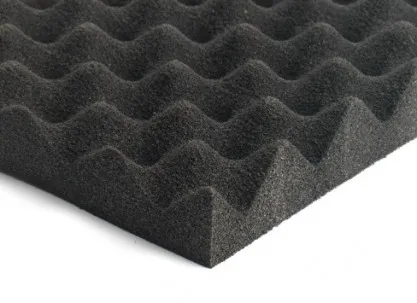
When noise reduction and fire safety both sit at the top of a project’s requirements, most conventional soundproofing materials simply can’t keep up. This is exactly where Acoustic Class 0 Foam earns its reputation. Engineered to combine dependable sound absorption with a genuinely low burn rate, this material has become a go-to choice for engineers, manufacturers, and facility managers who cannot afford to compromise on either performance or protection. In this article, we’ll break down what makes Class 0 foam different, how it works, where it’s used, and why it continues to be trusted across demanding industrial and construction sectors.
1. What Is Acoustic Class 0 Foam?
At its core, acoustic Class 0 foam is a flexible, open-celled polyurethane foam that has been chemically treated with a mineral compound. This treatment is what gives the foam its defining characteristic: a nil, or effectively zero, burn rate. In practical terms, that means the material resists ignition and does not support combustion, making it suitable for environments where fire risk is a genuine concern rather than a distant possibility.
Because this variation is commonly referred to as Impregnated Class 0 Foam, it’s worth clarifying what “impregnated” actually means here. The mineral compound isn’t simply applied to the surface — it’s worked into the foam structure itself, so the fire-resistant properties remain consistent throughout the material, not just on the outer layer. This is a crucial distinction for engineers specifying foam for enclosed or high-heat spaces, where surface-only treatments would eventually degrade or fail under stress.
2. Key Physical and Safety Characteristics
Beyond fire resistance, Class 0 foam brings a set of physical qualities that make it genuinely practical to work with:
2.1 Chemically Inert and Non-Dusting
The foam does not release particles or react with surrounding materials, which matters in sensitive industrial settings where contamination or airborne debris could interfere with equipment or air quality.
2.2 Flexible and Shape-Adaptable
Its inherent flexibility allows it to be applied to curved surfaces or moulded into complex geometries — something rigid soundproofing panels simply cannot achieve. This makes it far easier to line irregular enclosures, engine bays, or canopies without leaving gaps that would otherwise let sound escape.
2.3 Non-Fibrous and Non-Migrating
Unlike some traditional acoustic materials, high-density Class 0 profile foam does not erode or shed fibres when exposed to moving air. This keeps it stable over long periods of use, even in environments with constant airflow, such as generator housings or vehicle compartments.
3. Where Impregnated Class 0 Foam Is Used
The versatility of this foam means it shows up across a surprisingly broad range of sectors:
-
Engine rooms and generator canopies — where both heat and noise are constant challenges
-
Heavy vehicles and industrial machinery — for cabin trim panels and headliners, often paired with a silver dolphin fabric facing
-
Marine environments — using foil-facing fronts combined with PVC barriers for added sound blocking
-
Construction and building applications — anywhere fire codes demand rigorous compliance alongside acoustic performance
For automotive and marine applications specifically, manufacturers often specify a composite build — combining the foam core with lead foil, polymeric barriers, or damping sheets — to boost sound-blocking performance well beyond what foam alone could achieve.
4. How the Foam Is Supplied
One of the practical advantages of Class 0 foam is its flexibility in supply format. It’s available as:
-
Flat sheets
-
Roll foam
-
Pre-profiled shapes
-
Faced foam with a range of surface materials or spray-applied coatings
This range means fabricators aren’t forced to adapt their designs to fit a single foam format — instead, the material can be tailored to the application, whether that’s a small enclosure lining or a large-scale industrial installation.
5. Benefits of Acoustic Class 0 Foam
To summarise why this material continues to be specified across so many industries, here’s a clear look at its core benefits:
-
Nontoxic composition, making it safer to handle during fabrication and installation
-
Flexible and easy to cut, reducing labour time and allowing for precise, custom fitting
-
CFC and HCFC free, aligning with modern environmental and regulatory standards
-
Available with self-adhesive backing, simplifying installation without extra fixings
-
Nil burn rate, offering genuine peace of mind in high-risk fire environments
-
Excellent sound absorption, particularly effective in engine rooms and industrial enclosures
-
Long-term durability, resisting erosion even with constant air movement
Taken together, these qualities explain why Class 0 foam isn’t just another acoustic material — it’s a foam built specifically for situations where failure isn’t an option, whether that failure would come from noise complaints, regulatory non-compliance, or fire hazard.
6. Choosing the Right Facing and Composite Options
Not every application calls for the same finish. Some installations benefit from a foil-faced front, particularly in marine or high-heat settings, while others are better served by a fabric facing for aesthetic or tactile reasons — as is often the case in automotive interiors. Because the foam can also be combined with lead foil, polymeric barriers, or damping sheets, specifiers have considerable freedom to fine-tune both the acoustic and fire-safety performance of a single component, rather than layering multiple separate materials.
This adaptability is part of what makes impregnated Class 0 foam a preferred option for engineers working across sectors with very different demands — from a generator canopy that needs to muffle mechanical noise, to a vehicle cabin that needs to feel quiet without adding unnecessary weight.
7. A Note on General Acoustic Foam vs Class 0 Foam
It’s worth distinguishing Class 0 foam from standard acoustic foam used in studios, offices, or home theatres. Conventional acoustic foam — often shaped into wedges or pyramid profiles — is designed primarily to reduce echo and improve clarity within a room. It’s effective for controlling mid- to high-frequency reflections but isn’t built to withstand high heat or fire risk, and on its own, it doesn’t offer true soundproofing.
Class 0 foam, by contrast, is engineered for industrial and safety-critical environments first, with acoustic performance built in as a core feature rather than the sole purpose. Where standard foam might be glued to a studio wall, Class 0 foam is more likely to be lining an engine bay or a generator housing — spaces where fire resistance isn’t optional.
Conclusion
Acoustic Class 0 Foam, and its impregnated variant in particular, occupies a genuinely important niche: it delivers strong sound absorption without compromising on fire safety. From its chemically inert, non-dusting composition to its flexibility across curved and complex surfaces, this foam has been engineered to perform reliably in environments where standard acoustic materials would either underperform or pose an unacceptable fire risk.
Whether the application involves an engine room, a generator canopy, a heavy vehicle interior, or a marine installation, Impregnated Class 0 Foam offers a combination of practicality, safety, and acoustic control that’s difficult to match. For businesses weighing up soundproofing options where fire compliance is non-negotiable, this material deserves serious consideration.
If you’re exploring Class 0 foam solutions for your project, reaching out to a specialist supplier is the best next step. They can help match the right foam density, facing material, and composite build to your specific application — ensuring you get both the fire safety and the acoustic performance your project demands.