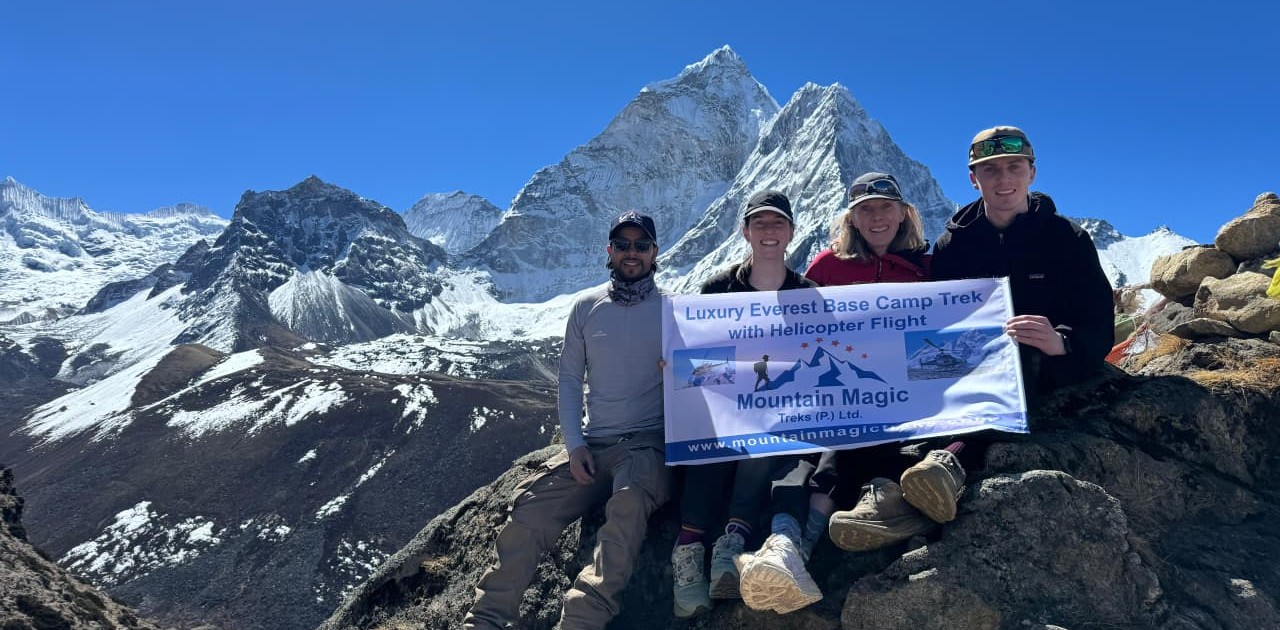
The journey to Everest Base Camp is about much more than reaching one famous spot. It is a slow change from busy city streets to quiet mountain trails, from green valleys to a world of rock, snow, and ice. Every day brings something different.
The Everest Base Camp Trek with helicopter return is designed for travelers who want to experience this journey on foot but do not want to spend several extra days walking back after reaching the Everest region. The trek takes you through famous Sherpa villages, mountain valleys, monasteries, and high-altitude landscapes before the return by helicopter.
Knowing what each day may look like makes the trip easier to understand. It also helps you prepare mentally and physically for what lies ahead.
Leaving Kathmandu Behind
The adventure begins in Kathmandu. Before heading into the mountains, this is your chance to check your gear, meet your trekking team, and make sure everything is ready.
The next major step is reaching Lukla, the gateway to the Everest region.
A Scenic Start in Lukla
The flight to Lukla is short, but the views can change quickly. Soon, the city disappears and mountain landscapes fill the windows.
After landing, the trek begins.
Lukla sits at around 2,860 meters, so the first walking day is already higher than most travelers are used to. The trail leads toward Phakding, passing small settlements and mountain streams along the way.
This first walk is not about covering a huge distance. It is about getting into the rhythm of trekking.
Entering the Khumbu Valley
From Phakding, the trail continues toward Namche Bazaar.
This section introduces you to the character of the Everest region. You will walk beside the Dudh Koshi River, cross suspension bridges, and pass through forests.
The sound of the river stays with you for much of the route.
The First Big Climb
The approach to Namche is more demanding than the earlier section.
The trail climbs steadily, and the famous suspension bridges add another memorable part to the journey.
As you get closer to Namche, the path becomes steeper.
Reaching the town feels rewarding because Namche is more than a place to sleep. It is the main trading and resting center of the Khumbu region.
A Necessary Pause at Namche
The Everest Base Camp Trek with helicopter return includes time for acclimatization at Namche Bazaar.
This is important because altitude should never be rushed.
Instead of climbing higher immediately, trekkers can spend the day exploring nearby areas and taking a short hike.
Explore Before You Climb Higher
A gentle walk gives you a chance to see more of the surrounding mountains without adding another major trekking day.
You may also notice how your body feels at this elevation.
Some travelers feel normal. Others may experience tiredness or a mild headache.
The important thing is to pay attention to your body and communicate with your guide.
Walking Toward Tengboche
After Namche, the trail begins to feel more remote.
The route passes through forests and open mountain areas before reaching Tengboche.
This is one of the most memorable sections because the landscape opens up to impressive Himalayan views.
A Quiet Moment at the Monastery
Tengboche is known for its Buddhist monastery.
The peaceful setting creates a sharp contrast with the physical effort of the trek.
Take a moment to slow down here. The Everest journey is not a race from one destination to another. The culture and people along the trail are a major part of the experience.
Into the Higher Mountains
From Tengboche, the route continues toward Dingboche.
The landscape slowly changes as the elevation increases.
Trees become less common, the air feels thinner, and the mountains seem much closer.
Another Acclimatization Day
Dingboche is another important place to adjust to altitude.
You can explore the surrounding hills during the day and return to the village afterward.
This type of gradual climb is important for high-altitude trekking.
The goal is not to prove how fast you can climb. The goal is to reach the higher sections safely and enjoy the journey.
The Trail Gets More Rugged
After Dingboche, the trail moves toward Lobuche.
The scenery becomes more open and rugged. Large trees are mostly gone, and rocky ground becomes a bigger part of the trail.
The mountains dominate the view.
You may also notice that walking feels different here. Even simple uphill sections can require more effort because of the altitude.
Reaching Gorakshep
Gorakshep is one of the final settlements before Everest Base Camp.
At this point, the environment feels completely different from Kathmandu.
The air is cold and thin. The landscape is mostly rocky, with massive peaks and glaciers surrounding the area.
Preparing for the Main Goal
From Gorakshep, trekkers head toward Everest Base Camp.
This is the moment when the purpose of the entire journey becomes very real.
The trail near the Khumbu Glacier is rough, and the altitude makes the walk more demanding.
But every step brings you closer.
The Extra Reward at Kala Patthar
For many trekkers, the next morning brings another highlight: Kala Patthar.
At roughly 5,545 meters, it is one of the highest points on the itinerary.
A Different View of Everest
The viewpoint is known for its close views of Everest and the surrounding peaks.
An early start can be especially rewarding because morning light creates dramatic views across the mountains.
The climb is demanding, mainly because of the altitude, so a slow pace is essential.
After enjoying the viewpoint, trekkers return toward Gorakshep.
Trading the Trail for the Sky
This is where the Everest Base Camp Trek with helicopter return becomes different from a standard return trek.
Instead of walking for several more days through the same valley, the return journey is completed by helicopter, subject to weather and flight conditions.
Seeing the Route From Above
From the air, the trail you walked becomes part of a much larger landscape.
Villages look tiny. Rivers appear as thin lines. Mountain ridges stretch far beyond what you could see while walking.
It is a completely different way to experience the Khumbu region.
The helicopter ride also saves valuable time for travelers who need to return to Kathmandu quickly.
What Makes This Journey Special?
The Everest Base Camp Trek with helicopter return works because it combines the strongest parts of an Everest adventure.
You get:
-
Several days of trekking through the Khumbu region
-
Time to experience Sherpa villages
-
Acclimatization at key elevations
-
A visit to Everest Base Camp
-
A climb to Kala Patthar
-
A scenic helicopter journey back
-
Less time spent repeating the same trail
It is still a demanding adventure, but the helicopter return gives the overall trip a different pace.
Final Thoughts
The Everest Base Camp Trek with helicopter return is not simply a trek followed by a flight. It is a journey that changes from day to day.
One morning you may be walking through a forest. A few days later, you are surrounded by glaciers and giant Himalayan peaks.
You experience the mountains slowly, one trail at a time, and then leave them from the sky.
For travelers who want to explore Everest on foot while saving time on the return journey, this style of trek offers a memorable balance of adventure, culture, scenery, and convenience.
Frequently Asked Questions
How many days does the journey take?
Mountain Magic Treks lists this Everest Base Camp itinerary as a 10-day trip.
Where does the trek begin?
The trekking portion begins in Lukla after the flight from Kathmandu.
Why are acclimatization days included?
They give your body time to adjust to increasing altitude before you continue higher.
What is the highest point on the itinerary?
Kala Patthar is approximately 5,545 meters above sea level.
Can bad weather affect the helicopter return?
Yes. Mountain weather can change quickly, so helicopter operations depend on suitable flying conditions.
Is the helicopter return easier than walking back?
It saves several days of downhill trekking, but the main challenge of reaching Everest Base Camp and Kala Patthar remains. Proper preparation is still necessary.