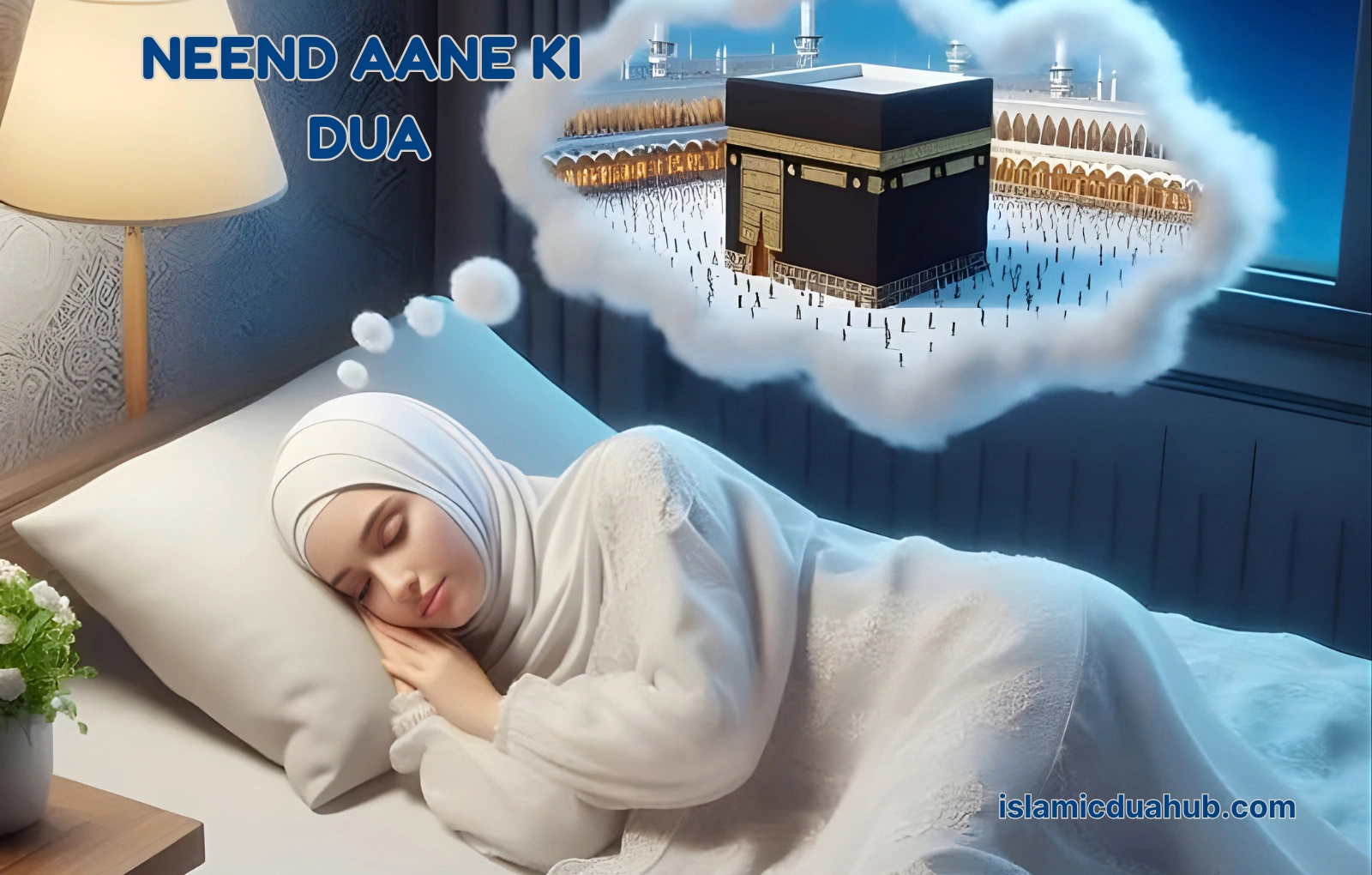
Many people today struggle to fall asleep at night. The pressures of daily life, constant worries, and excessive screen time have stolen the peace that sleep is supposed to bring. Islam has given us a beautiful and complete way of life and that includes how we prepare for sleep.
The neend aane ki dua is a supplication taught by the Prophet Muhammad ﷺ that a Muslim reads before going to sleep. It is not just a routine phrase it is a heartfelt act of surrender to Allah, an acknowledgment that our life, our sleep, and our death all belong to Him alone.
Reading the dua for sleep (neend aane ki dua) before bed is an established Sunnah of the Prophet ﷺ, found in authentic Hadith. When a Muslim says this dua with sincerity, the night itself becomes an act of worship.
Neend Aane Ki Dua in Arabic
The most well-known and authentic dua that the Prophet ﷺ recited before sleeping is:
بِاسْمِكَ اللَّهُمَّ أَمُوتُ وَأَحْيَا
Transliteration
Bismika Allahumma amutu wa ahya
Neend Aane Ki Dua in English – Meaning
“With Your name, O Allah, I die and I live.”
Hadith Reference
Hudhaifah (may Allah be pleased with him) narrated:
“Whenever the Prophet ﷺ intended to go to sleep, he would place his right hand under his right cheek and say: ‘Bismika Allahumma amutu wa ahya (With Your name, O Allah, I die and I live).’ And when he woke up, he would say: ‘Alhamdulillahil-ladhi ahyana ba’da ma amatana, wa ilaihin-nushur (All praise is for Allah Who gave us life after causing us to die, and to Him is the resurrection).'”
Dua Upon Waking Up (Morning Dua After Sleep)
When you wake up from sleep, recite this dua:
اَلْحَمْدُ لِلّٰهِ الَّذِي أَحْيَانَا بَعْدَ مَا أَمَاتَنَا وَإِلَيْهِ النُّشُورُ
Transliteration:
Alhamdulillahil-ladhi ahyana ba’da ma amatana, wa ilaihin-nushur
Meaning in English:
“All praise is for Allah, Who gave us life after causing us to die, and to Him is the resurrection.”
Second Masnoon Dua – A Comprehensive Bedtime Supplication
Another powerful dua that the Prophet ﷺ recited before sleeping is:
اللَّهُمَّ أَسْلَمْتُ نَفْسِي إِلَيْكَ، وَوَجَّهْتُ وَجْهِي إِلَيْكَ، وَفَوَّضْتُ أَمْرِي إِلَيْكَ، وَأَلْجَأْتُ ظَهْرِي إِلَيْكَ، رَغْبَةً وَرَهْبَةً إِلَيْكَ، لَا مَلْجَأَ وَلَا مَنْجَى مِنْكَ إِلَّا إِلَيْكَ، آمَنْتُ بِكِتَابِكَ الَّذِي أَنْزَلْتَ وَبِنَبِيِّكَ الَّذِي أَرْسَلْتَ
Transliteration:
Allahumma aslamtu nafsi ilaika, wa wajjahtu wajhi ilaika, wa fawwadtu amri ilaika, wa alja’tu zahri ilaika, raghbatan wa rahbatan ilaika, la malja’a wa la manja minka illa ilaika, amantu bikitabikal-ladhi anzalta, wa nabiyyikal-ladhi arsalt.
Meaning in English:
“O Allah, I have submitted myself to You, I have turned my face toward You, I have entrusted my affairs to You, and I have placed my back against You, out of hope and fear of You. There is no refuge and no escape from You except to You. I believe in Your Book which You revealed and in Your Prophet whom You sent.”
The Prophet ﷺ said that whoever recites this dua before sleeping and dies that same night, dies upon the fitrah (the natural state of Islam). This shows how spiritually significant this bedtime dua truly is.
Neend Aane Ki Dua in Quran – Quranic Connection to Sleep
While the specific neend aane ki dua comes from the Hadith, the Quran itself gives great importance to sleep. Allah Ta’ala says:
وَمِنْ آيَاتِهِ مَنَامُكُم بِاللَّيْلِ وَالنَّهَارِ (Surah Ar-Rum, 30:23)
Meaning: “And among His signs is your sleep by night and by day.”
In Surah Az-Zumar (39:42), Allah mentions that He takes the souls of people during sleep. This reminds us that every night we close our eyes, we are in the care of Allah alone. That is why the neend aane ki dua in Quran context is so deeply meaningful sleep is not just rest, it is a sign of Allah’s power and mercy.
Reciting Ayatul Kursi (Surah Al-Baqarah 2:255) before sleep is also strongly recommended. The Prophet ﷺ said that whoever recites it before sleeping, an angel will guard him throughout the night and Shaytan will not come near him until morning. (Sahih Bukhari 2311)
When to Read the Neend Aane Ki Dua
The correct time to read the neend aane ki dua is when you are lying down on your bed, just before you close your eyes to sleep. The complete Sunnah bedtime routine of the Prophet ﷺ is:
- Sleep on your right side, placing your right hand under your right cheek
- Recite Ayatul Kursi (Surah Al-Baqarah 2:255)
- Recite Surah Al-Ikhlas, Surah Al-Falaq, and Surah An-Naas blow on your palms and pass them over your body, doing this three times
- Then recite: “Bismika Allahumma amutu wa ahya”
- You may also recite the longer dua: “Allahumma aslamtu nafsi ilaika…”
It is also a Sunnah to sleep early after Isha prayer and to wake up for Fajr. Sleep that begins with the remembrance of Allah carries barakah (blessing) throughout the night.
Neend Aane Ki Dua for Children (Bacho Ko Neend Aane Ki Dua)
Teaching children the neend aane ki dua from a young age is one of the most valuable gifts a parent can give. When children grow up with this habit, their hearts remain connected to Allah even during the night.
The neend aane ki dua for children to memorize first is:
بِاسْمِكَ اللَّهُمَّ أَمُوتُ وَأَحْيَا Bismika Allahumma amutu wa ahya “With Your name, O Allah, I die and I live.”
This short, simple phrase is easy for even young children to memorize. Once they have it, gradually add Ayatul Kursi and the three Quls.
If a small child cannot sleep or is restless, parents can gently recite Surah Al-Fatiha and Ayatul Kursi while softly passing their hand over the child’s head. This is a recognized and loving Islamic practice.
Benefits of Reading the Neend Aane Ki Dua
1. Complete Trust in Allah
When you say “Bismika Allahumma amutu wa ahya,” you are placing your entire night in Allah’s hands. Sleep has been described in Islamic tradition as a “minor death” and through this dua, you consciously surrender that moment to your Creator.
2. Protection from Shaytan
Reciting Ayatul Kursi before sleep ensures the protection of an angel throughout the night. The Prophet ﷺ confirmed that Shaytan cannot come near a person who recites it before sleeping. (Sahih Bukhari 2311)
3. Peace and Tranquility of the Heart
The Quran says: “Verily, in the remembrance of Allah do hearts find rest.” (Surah Ar-Ra’d, 13:28) When the last thing on your tongue before sleep is the name of Allah, the heart settles, anxiety fades, and rest comes naturally.
4. Dying Upon Faith (Iman)
The Prophet ﷺ said that whoever recites the longer bedtime dua (Allahumma aslamtu nafsi ilaika…) and then dies that same night, dies upon Islam upon the pure state of faith. This is one of the greatest mercies Allah has offered through a simple act before sleep. (Sahih Bukhari 247)
5. Barakah in the Night and Ease at Fajr
A night that begins with worship and remembrance of Allah carries barakah. Many Muslims who adopt the full Sunnah bedtime routine report waking up feeling more rested and finding it easier to rise for Fajr prayer.
Sunnah Bedtime Practices for Good Sleep
Reading the achi neend neend aane ki dua is the heart of the bedtime routine, but the Prophet ﷺ also taught us practical habits that complement this supplication:
| Sunnah Practice | Reference |
|---|---|
| Sleep on the right side | Sahih Bukhari |
| Dust or clean the bed before lying down | Sahih Bukhari 6320 |
| Recite Ayatul Kursi | Sahih Bukhari 2311 |
| Recite Surah Ikhlas, Falaq & Naas (3 times each) | Sahih Bukhari |
| Perform Wudu before sleeping | Sahih Bukhari |
| Sleep early after Isha prayer | Sahih Bukhari |
| Avoid excessive screen time before bed | — |
Each of these practices carries its own reward, and together they form a complete Sunnah routine that brings peace to both the body and the soul.
Read Also: Mitti Dene Ki Dua
Conclusion
The neend aane ki dua is far more than a bedtime ritual it is a moment of pure connection with Allah before the soul rests. When you whisper “Bismika Allahumma amutu wa ahya” as your eyes grow heavy, you are reminding yourself that every breath, every heartbeat, and every moment of consciousness is a gift from Him.
Make this dua a habit every single night. Teach it to your children, share it with your family, and hold onto it on the nights when sleep feels far away. The achi neend neend aane ki dua is not just about falling asleep it is about waking up with gratitude, knowing that Allah kept you safe through the night.
May Allah grant us all peaceful sleep, ease in our nights, and the strength to rise for Fajr. Ameen.
Frequently Asked Questions
What is neend aane ki dua?
The most well-known neend aane ki dua is: “Bismika Allahumma amutu wa ahya” meaning “With Your name, O Allah, I die and I live.” It is narrated in Sahih al-Bukhari (Hadith 6324) and is the authentic bedtime supplication of the Prophet ﷺ.
What is neend aane ki dua in English?
The neend aane ki dua in English means: “With Your name, O Allah, I die and I live.” It is a brief but deeply meaningful declaration of reliance on Allah before surrendering to sleep.
What is the neend aane ki dua for children?
The best bacho ko neend aane ki dua to start with is the short dua: “Bismika Allahumma amutu wa ahya.” It is easy for children to memorize. Once they know it, parents can gradually add Ayatul Kursi and the three Quls (Surah Ikhlas, Falaq, and Naas).
Is there a special dua if I wake up in the middle of the night?
Yes. If you wake up during the night, recite: “Laa ilaaha illallahu wahdahu laa shareeka lahu, lahul mulku wa lahul hamdu wa huwa ‘ala kulli shay’in qadeer.” The Prophet ﷺ said that whoever recites this upon waking and then makes dua, it will be answered. (Sahih Bukhari 1154)
Why is sleeping on the right side a Sunnah?
The Prophet ﷺ consistently slept on his right side. Modern science also suggests that sleeping on the right side has physical health benefits yet the primary reason for a Muslim is simply following the way of the Prophet ﷺ, which carries reward in itself.
Written by: Ahmad Raza
Credentials: Islamic Studies Content Writer
 Read More duas for daily life at The Dua For You