The first moments after waking carry profound spiritual significance. When you open your eyes to a new day, Islam teaches you to immediately turn your heart toward Allah with gratitude and remembrance. The practice of reciting the subha bakhair dua transforms an ordinary wake-up into a blessed beginning, setting a positive tone for everything that follows.
Many Muslims search for the proper way to greet the morning with Islamic supplications. Whether you’re establishing a new spiritual habit or deepening your existing practice, understanding these prayers connects you to a tradition maintained by Prophet Muhammad (peace be upon him) and millions of believers throughout history.
Understanding the Subha Bakhair Dua
The term “subha bakhair dua” combines the Urdu phrase “subha bakhair” (good morning) with the Islamic concept of dua (supplication). While “subha bakhair” itself is a cultural greeting from South Asian Muslim communities, the Islamic tradition offers specific morning supplications that fulfill the spiritual essence of wishing someone and yourself a blessed morning.
The subha bakhair dua encompasses several prayers taught by Prophet Muhammad (peace be upon him) for recitation upon waking and during the early morning hours. These supplications acknowledge Allah’s sovereignty, express gratitude for life and health, and seek protection and blessings for the day ahead.
Subha Bakhair Dua Dua Upon Waking Up
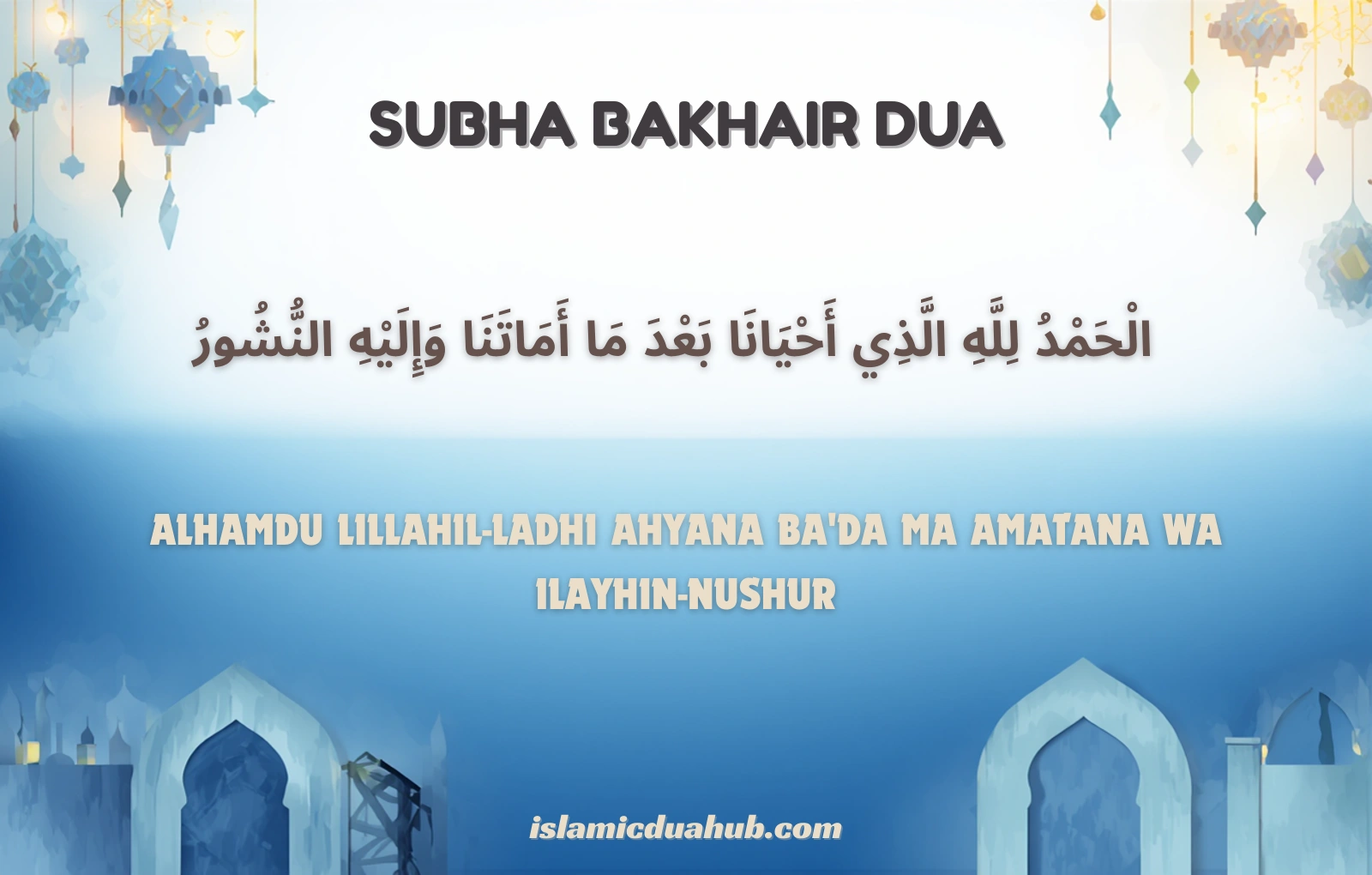
The Prophet (peace be upon him) taught specific words to recite immediately upon waking. This is the foundation of the subha bakhair dua practice.
Arabic:
الْحَمْدُ لِلَّهِ الَّذِي أَحْيَانَا بَعْدَ مَا أَمَاتَنَا وَإِلَيْهِ النُّشُورُ
Transliteration:
Alhamdu lillahil-ladhi ahyana ba’da ma amatana wa ilayhin-nushur
Meaning:
“All praise belongs to Allah who gave us life after causing us to die, and to Him is the resurrection.”
Source: Sahih al-Bukhari (6312)
Context: Sleep is considered a minor death in Islamic understanding. When you wake, you’re essentially being brought back to life, making this dua a profound acknowledgment of Allah’s power over life and death.
Morning Gratitude Supplication
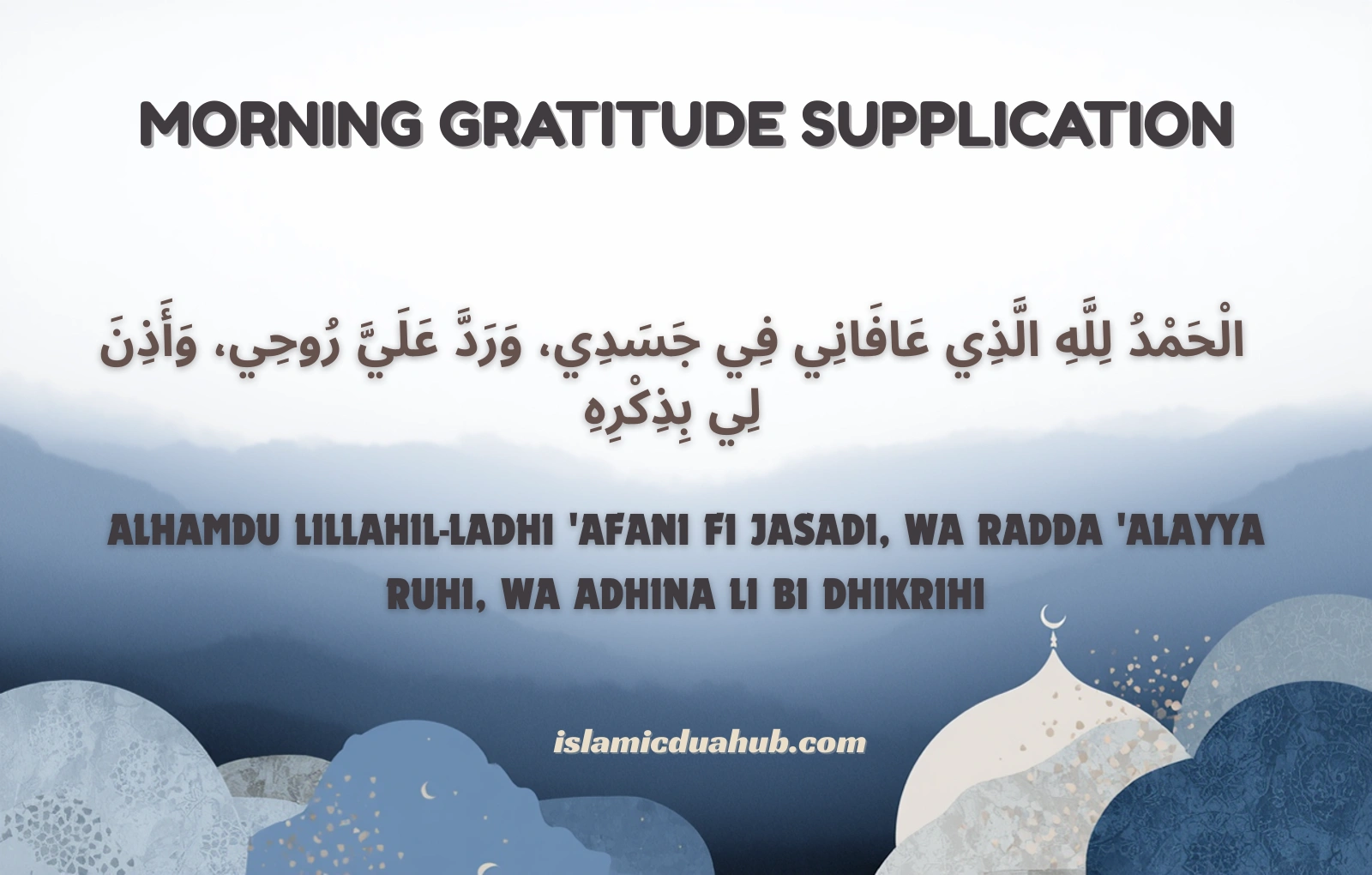
After the initial waking dua, this comprehensive prayer expresses gratitude for physical well-being and sustenance an essential component of the subha bakhair dua collection.
Arabic:
الْحَمْدُ لِلَّهِ الَّذِي عَافَانِي فِي جَسَدِي، وَرَدَّ عَلَيَّ رُوحِي، وَأَذِنَ لِي بِذِكْرِهِ
Transliteration:
Alhamdu lillahil-ladhi ‘afani fi jasadi, wa radda ‘alayya ruhi, wa adhina li bi dhikrihi
Meaning:
“All praise to Allah who restored health to my body, returned my soul to me, and permitted me to remember Him.”
Source: Sunan at-Tirmidhi (3401)
Application: Recite this while still lying down, before rising from bed. It acknowledges three fundamental blessings: health, consciousness, and the ability to worship.
Subha Bakhair Dua in Urdu
When exploring the subha bakhair dua in Urdu-speaking communities, you’ll notice how cultural warmth blends with Islamic spirituality. The phrase “subha bakhair” serves as a friendly morning greeting, while the actual supplications come from prophetic traditions.
Muslims in Pakistan, India, and other South Asian regions often combine the cultural greeting with Islamic morning prayers. The proper approach integrates both cultural warmth and spiritual depth.
Subha Bakhair Dua Upon Waking Up In Urdu
تمام تعریفیں اللہ کے لیے ہیں جس نے ہمیں موت کے بعد زندگی عطا فرمائی اور اسی کی طرف اٹھ کر جانا ہے۔
Morning Gratitude Supplication In Urdu
تمام تعریفیں اللہ کے لیے ہیں جس نے میرے جسم میں عافیت عطا فرمائی، میری روح مجھے لوٹائی اور مجھے اپنے ذکر کی اجازت دی۔
When greeting someone in the morning, you can say “Assalamu alaikum” (peace be upon you) followed by the subha bakhair dua:
Arabic:
أَصْبَحْنَا وَأَصْبَحَ الْمُلْكُ لِلَّهِ
Transliteration:
Asbahna wa asbahal-mulku lillah
Meaning:
“We have entered morning, and the dominion belongs to Allah.”
Source: Sahih Muslim (2723)
The Complete Morning Dhikr
The Prophet (peace be upon him) taught a comprehensive morning remembrance that provides protection and blessings throughout the day. This extended version of the subha bakhair dua offers complete coverage for morning spiritual needs.
Arabic:
أَصْبَحْنَا وَأَصْبَحَ الْمُلْكُ لِلَّهِ، وَالْحَمْدُ لِلَّهِ، لَا إِلَهَ إِلَّا اللَّهُ وَحْدَهُ لَا شَرِيكَ لَهُ، لَهُ الْمُلْكُ وَلَهُ الْحَمْدُ وَهُوَ عَلَى كُلِّ شَيْءٍ قَدِيرٌ، رَبِّ أَسْأَلُكَ خَيْرَ مَا فِي هَذَا الْيَوْمِ وَخَيْرَ مَا بَعْدَهُ، وَأَعُوذُ بِكَ مِنْ شَرِّ مَا فِي هَذَا الْيَوْمِ وَشَرِّ مَا بَعْدَهُ، رَبِّ أَعُوذُ بِكَ مِنَ الْكَسَلِ وَسُوءِ الْكِبَرِ، رَبِّ أَعُوذُ بِكَ مِنْ عَذَابٍ فِي النَّارِ وَعَذَابٍ فِي الْقَبْرِ
Transliteration:
Asbahna wa asbahal-mulku lillah, walhamdu lillah, la ilaha illallahu wahdahu la sharika lah, lahul-mulku wa lahul-hamd, wa huwa ‘ala kulli shay’in qadir, Rabbi as’aluka khayra ma fi hadhal-yawm wa khayra ma ba’dah, wa a’udhu bika min sharri ma fi hadhal-yawm wa sharri ma ba’dah, Rabbi a’udhu bika minal-kasal wa su’il-kibar, Rabbi a’udhu bika min ‘adhabin fin-nar wa ‘adhabin fil-qabr
Meaning:
“We have entered morning and the dominion belongs to Allah, and all praise belongs to Allah. There is no deity except Allah alone, without partner. To Him belongs sovereignty and praise, and He has power over everything. My Lord, I ask You for the good of this day and the good that follows it, and I seek refuge in You from the evil of this day and the evil that follows it. My Lord, I seek refuge in You from laziness and the misery of old age. My Lord, I seek refuge in You from punishment in the Fire and punishment in the grave.”
Source: Sahih Muslim (2723)
Benefits: This comprehensive supplication covers requests for good, protection from harm, seeking energy for worship, and refuge from ultimate consequences of wrongdoing.
Ayat al-Kursi for Morning Protection
Reciting Ayat al-Kursi (Verse of the Throne) as part of your subha bakhair dua routine provides divine protection until evening.
اللَّهُ لَا إِلَٰهَ إِلَّا هُوَ الْحَيُّ الْقَيُّومُ ۚ لَا تَأْخُذُهُ سِنَةٌ وَلَا نَوْمٌ ۚ لَهُ مَا فِي السَّمَاوَاتِ وَمَا فِي الْأَرْضِ ۗ مَنْ ذَا الَّذِي يَشْفَعُ عِنْدَهُ إِلَّا بِإِذْنِهِ ۚ يَعْلَمُ مَا بَيْنَ أَيْدِيهِمْ وَمَا خَلْفَهُمْ ۖ وَلَا يُحِيطُونَ بِشَيْءٍ مِنْ عِلْمِهِ إِلَّا بِمَا شَاءَ ۚ وَسِعَ كُرْسِيُّهُ السَّمَاوَاتِ وَالْأَرْضَ ۖ وَلَا يَئُودُهُ حِفْظُهُمَا ۚ وَهُوَ الْعَلِيُّ الْعَظِيمُ
Source: Quran 2:255
Instruction: Recite once in the morning for protection until evening.
The Last Two Verses of Surah al-Baqarah
These verses provide protection when recited at night or in the morning.
آمَنَ الرَّسُولُ بِمَا أُنْزِلَ إِلَيْهِ مِنْ رَبِّهِ وَالْمُؤْمِنُونَ ۚ كُلٌّ آمَنَ بِاللَّهِ وَمَلَائِكَتِهِ وَكُتُبِهِ وَرُسُلِهِ لَا نُفَرِّقُ بَيْنَ أَحَدٍ مِنْ رُسُلِهِ ۚ وَقَالُوا سَمِعْنَا وَأَطَعْنَا ۖ غُفْرَانَكَ رَبَّنَا وَإِلَيْكَ الْمَصِيرُ. لَا يُكَلِّفُ اللَّهُ نَفْسًا إِلَّا وُسْعَهَا ۚ لَهَا مَا كَسَبَتْ وَعَلَيْهَا مَا اكْتَسَبَتْ ۗ رَبَّنَا لَا تُؤَاخِذْنَا إِنْ نَسِينَا أَوْ أَخْطَأْنَا ۚ رَبَّنَا وَلَا تَحْمِلْ عَلَيْنَا إِصْرًا كَمَا حَمَلْتَهُ عَلَى الَّذِينَ مِنْ قَبْلِنَا ۚ رَبَّنَا وَلَا تُحَمِّلْنَا مَا لَا طَاقَةَ لَنَا بِهِ ۖ وَاعْفُ عَنَّا وَاغْفِرْ لَنَا وَارْحَمْنَا ۚ أَنْتَ مَوْلَانَا فَانْصُرْنَا عَلَى الْقَوْمِ الْكَافِرِينَ
Source: Quran 2:285-286
Benefit: The Prophet (peace be upon him) said whoever recites these two verses at night, they will suffice him (Sahih al-Bukhari 5009).
Surah al-Ikhlas, al-Falaq, and an-Nas (Morning Protection)
Reciting these three short surahs three times each in the morning provides complete protection an essential addition to your subha bakhair dua collection.
Surah al-Ikhlas:
قُلْ هُوَ اللَّهُ أَحَدٌ. اللَّهُ الصَّمَدُ. لَمْ يَلِدْ وَلَمْ يُولَدْ. وَلَمْ يَكُنْ لَهُ كُفُوًا أَحَدٌ
Qul huwa Allahu ahad. Allahu assamad. Lam yalid wa lam yulad. Wa lam yakun lahu kufuwan ahad
“He is Allah, the One. Allah, the Eternal Refuge. He neither begets nor is born. Nor is there to Him any equivalent.”
Surah al-Falaq:
قُلْ أَعُوذُ بِرَبِّ الْفَلَقِ. مِنْ شَرِّ مَا خَلَقَ. وَمِنْ شَرِّ غَاسِقٍ إِذَا وَقَبَ. وَمِنْ شَرِّ النَّفَّاثَاتِ فِي الْعُقَدِ. وَمِنْ شَرِّ حَاسِدٍ إِذَا حَسَدَ
Qul a’udhu bi rabbil-falaq. Min sharri ma khalaq. Wa min sharri ghasiqin idha waqab. Wa min sharrin-naffathati fil-‘uqad. Wa min sharri hasidin idha hasad
“I seek refuge in the Lord of daybreak. From the evil of what He created. And from the evil of darkness when it settles. And from the evil of blowers in knots. And from the evil of an envier when he envies.”
Surah an-Nas:
قُلْ أَعُوذُ بِرَبِّ النَّاسِ. مَلِكِ النَّاسِ. إِلَٰهِ النَّاسِ. مِنْ شَرِّ الْوَسْوَاسِ الْخَنَّاسِ. الَّذِي يُوَسْوِسُ فِي صُدُورِ النَّاسِ. مِنَ الْجِنَّةِ وَالنَّاسِ
Qul a’udhu bi rabbin-nas. Malikin-nas. Ilahin-nas. Min sharril-waswasil-khannas. Alladhi yuwaswisu fi sudurin-nas. Minal-jinnati wan-nas
“I seek refuge in the Lord of mankind. The Sovereign of mankind. The God of mankind. From the evil of the retreating whisperer. Who whispers into the hearts of mankind. From among jinn and mankind.”
Source: Sunan Abi Dawud (5082)
Instruction: Recite each surah three times in the morning and three times in the evening.
Read Also: Dua Allahumma La Sahla Illa Ma
Practical Implementation Guide
Start Small, Build Gradually
Week 1: Begin with just the waking dua. Keep a written transliteration beside your bed.
Week 2-3: Add the morning gratitude supplication to your subha bakhair dua routine.
Week 4 onwards: Gradually incorporate the longer morning dhikr and Quranic verses.
Create Physical Reminders
- Place a card with transliteration on your nightstand
- Set a gentle morning alarm labeled “Morning Dhikr”
- Use a dhikr counter app to track recitations
Timing Considerations
Optimal window: Between Fajr prayer and sunrise (most blessed time)
Acceptable window: Anytime after waking until Dhuhr prayer
Minimum commitment: The waking dua takes 5 seconds; comprehensive morning adhkar takes 5-10 minutes
Common Mistakes to Avoid
❌ Rushing through words without reflection
✅ Recite slowly, pondering the meaning
❌ Waiting until you’re “properly awake”
✅ Say the waking dua before even sitting up
❌ Feeling guilty about imperfect Arabic pronunciation
✅ Do your best sincerity matters more than perfect accent
Conclusion
The moments after you open your eyes each morning offer a precious opportunity to connect with your Creator before the world’s demands rush in. The subha bakhair dua collection from the simple waking supplication to the comprehensive morning dhikr transforms routine awakening into spiritual renewal.
You now have the Arabic text, accurate transliterations, and clear meanings for each supplication. The path forward is straightforward: start with one dua tomorrow morning. Let that become second nature, then add another. Within weeks, you’ll have built a morning routine that nourishes your soul and sets a blessed tone for each day.
Remember, the subha bakhair dua isn’t just words to memorize these are conversations with Allah, expressions of gratitude, and requests for guidance and protection. Every sincere recitation plants seeds of goodness that will flourish throughout your day and beyond.
? Frequently Asked Questions
Q: Can I recite the subha bakhair dua in my own language instead of Arabic?
The duas taught by the Prophet (peace be upon him) carry special blessings when recited in Arabic. However, you can supplement with supplications in your language. Start by learning the Arabic transliteration, then gradually memorize the Arabic text while always keeping the meaning in mind.
Q: What if I forget to say the subha bakhair dua immediately upon waking?
Say it as soon as you remember. The blessing remains even if you recite it a few minutes after waking. Consistency matters more than perfect timing.
Q: How many times should I recite the subha bakhair dua?
The waking dua is recited once. The comprehensive morning dhikr mentioned in Sahih Muslim is also recited once. However, the three protective surahs (al-Ikhlas, al-Falaq, an-Nas) should be recited three times each.
Q: Is there a specific dua for saying good morning to family members?
The Islamic greeting “Assalamu alaikum wa rahmatullah” (peace and mercy of Allah be upon you) is appropriate for any time of day. You can add “Subha bakhair” in Urdu-speaking contexts as a cultural expression while maintaining the Islamic greeting.
Q: What if I work night shifts and sleep during the day?
Islamic timings are based on your personal sleep-wake cycle. Recite the waking dua whenever you wake, regardless of clock time. For morning-specific adhkar tied to Fajr time, try to recite them during the actual Fajr period even if you’re about to sleep.
Written by: Ahmad Raza
Credentials: Islamic Studies Content Writer
 Read More duas for daily life at The Dua For You