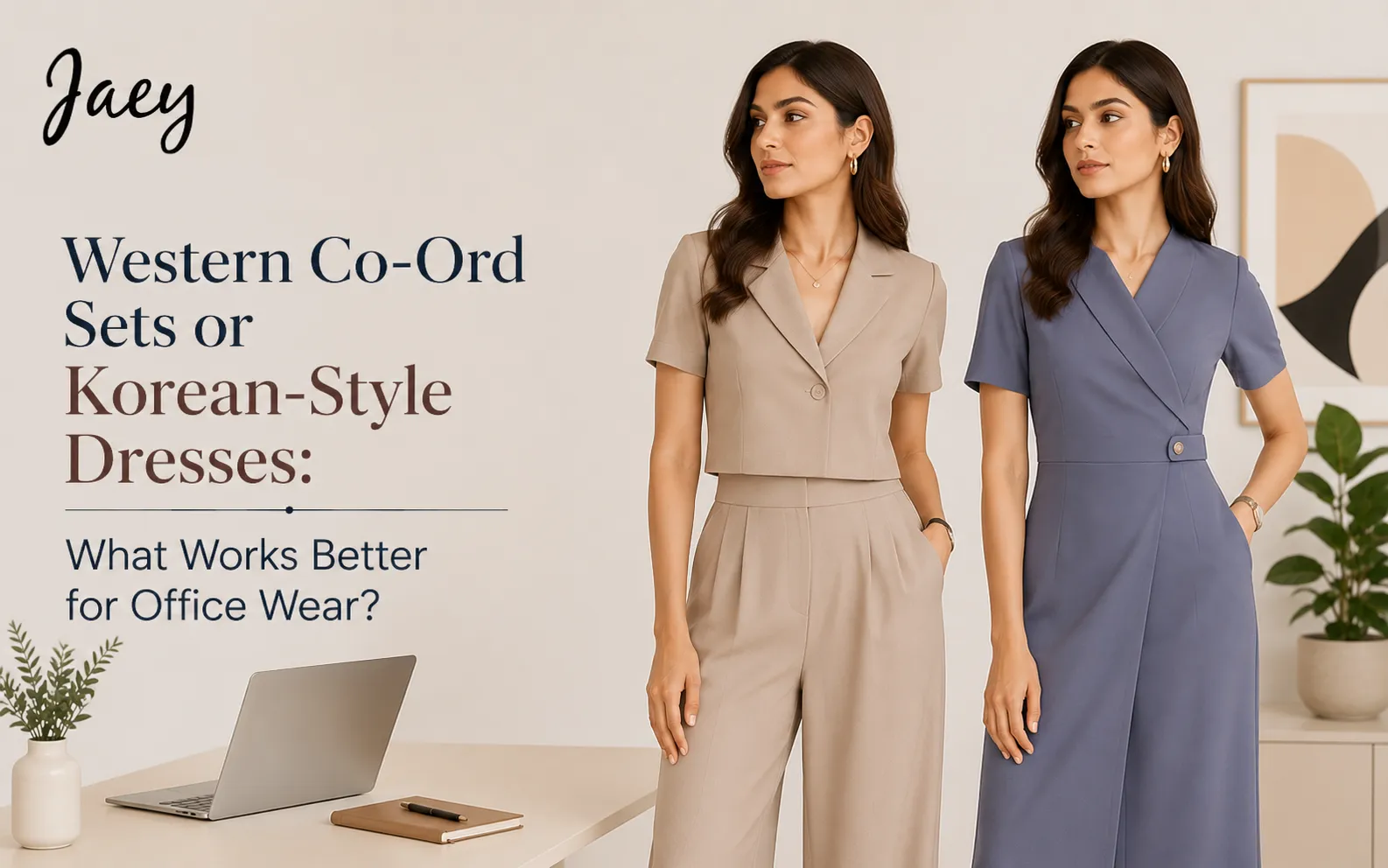
Choosing office wear is rarely a simple question of formal versus casual. The same workplace may include quiet desk days, client calls, presentations and after-work plans. An outfit that works well in one setting can feel stiff or underdressed in another. Fit comes first. Comfort matters. Repeat wear matters too. That saves time.
Two options often considered by working women are western co ord sets for women and clean, Korean-inspired dresses. Both can make mornings easier. They create a complete look without several layers. Their strengths, however, are not the same.
What a western co-ord communicates
A tailored co-ord tends to look structured and deliberate. Matching fabric creates visual order. A defined shoulder, straight trouser and neat waist can make the outfit suitable for meetings and presentations.
Co-ords are also flexible after purchase. The top and bottom can be worn separately. This makes them useful for people building a smaller wardrobe. A co-ord in navy, charcoal, olive or another quiet shade can support many combinations without looking repetitive.
There are limits. Matching sets with bold prints can become memorable after only a few wears. Very cropped tops may need an inner layer for some offices. A close waistband can also become uncomfortable during long sitting hours. Fit and workplace culture should guide the choice.
What makes Korean-style dresses distinct
The term Korean style covers several looks. Office-friendly designs often share a few qualities. They use controlled volume, simple lines, soft tailoring and small design details. A tie waist, angled seam, pleat or clean collar may add interest without heavy trim.
Well-designed korean style dresses can feel polished while remaining easy to move in. Many styles create shape through cut rather than tightness. That can be useful in warm weather and during long workdays.
Still, the label alone does not guarantee office suitability. Some Korean-inspired dresses are very short, oversized or made for casual wear. Others have sheer panels, dramatic sleeves or loose necklines. Look at the actual cut, fabric and length instead of buying only because a style is described as Korean.
Compare the silhouette
A co-ord creates two clear sections: top and bottom. This can help adjust proportions. A shorter jacket-style top may work with high-rise trousers. A longer top may sit better with a narrow or straight bottom.
A dress creates one line from shoulder to hem. This can feel visually calm and may be more comfortable when there is no separate waistband. Straight, A-line and softly belted dresses each create a different effect. None is universally flattering. The right shape depends on fit, movement and personal preference.
Try both options while sitting, walking and reaching. Watch what happens at the bust, waist and back. A garment should not need constant pulling or adjustment. Comfort is not separate from polish. Visible discomfort can make even an expensive outfit look wrong.
Think about Indian weather and travel
Office dressing in India often involves heat outside and strong air-conditioning indoors. Breathable fabric helps during the commute, while a light layer may be needed at the desk.
A co-ord allows easy layering because the top can be changed or covered. A dress may feel cooler because it has fewer pressure points. Fabric weight matters in both cases. Thin fabric can cling or become transparent under bright light. Heavy fabric may hold shape but trap heat.
Crepe blends, cotton blends and mid-weight woven fabrics often provide a useful balance. Check whether the material wrinkles after sitting. Also check whether sweat marks are likely to show in the chosen colour.
Decide how much styling time you want
A dress is usually the faster option. Add shoes, a bag and perhaps one layer. The outfit is complete. This can help on early mornings or travel days.
A co-ord may take slightly more thought, especially when pieces are mixed. That extra choice can also make the wardrobe more interesting. One set can produce several combinations if its colour and cut work with existing clothes.
Accessories should match the role of the outfit. A strong co-ord may need only small earrings and a clean bag. A simple dress may carry a belt, watch or structured jacket. Too many competing details can reduce the calm effect expected from office wear.
Which option is better?
Choose a western co-ord when the day requires structure. It also works when separate pieces are useful or the outfit must move from formal to smart casual. Choose a Korean-style dress when comfort, speed and a softer line matter more.
There is no need to select one category for the whole wardrobe. A small number of carefully chosen pieces can cover different situations. The key is to avoid buying two garments that solve exactly the same need.
Good office wear should support concentration rather than demand attention. It should allow natural movement, feel appropriate in the workplace and still reflect the person wearing it. The label matters less than how well the garment performs through a full day.