When a Muslim stands before Allah in Salah, every word carries weight. The opening of the prayer is not just a ritual beginning it is a declaration of complete submission. The Vajjahthu Dua, also known as Dua e Istiftah or the Opening Supplication of Prayer (Salah), is recited silently right after the opening Takbeer (Allahu Akbar) and before Surah Al-Fatiha.
The Vajjahthu Dua begins with the words ‘Inni Wajjahtu Wajhiya,’ which means ‘I have turned my face towards the One who created the heavens and the earth.’ This single sentence captures the spirit of Salah that a believer is completely turning towards Allah, leaving all distractions of the world behind.
This dua is narrated in several authentic Hadith collections. It is reported that the Prophet Muhammad (ﷺ) used to recite this supplication at the start of his prayer. Following his Sunnah, Muslims around the world recite it in their daily prayers, especially in the optional (Nafl) and Tahajjud prayers.
Vajjahthu Dua in Arabic
The following is the correct and complete Arabic text of the Vajjahthu Dua:
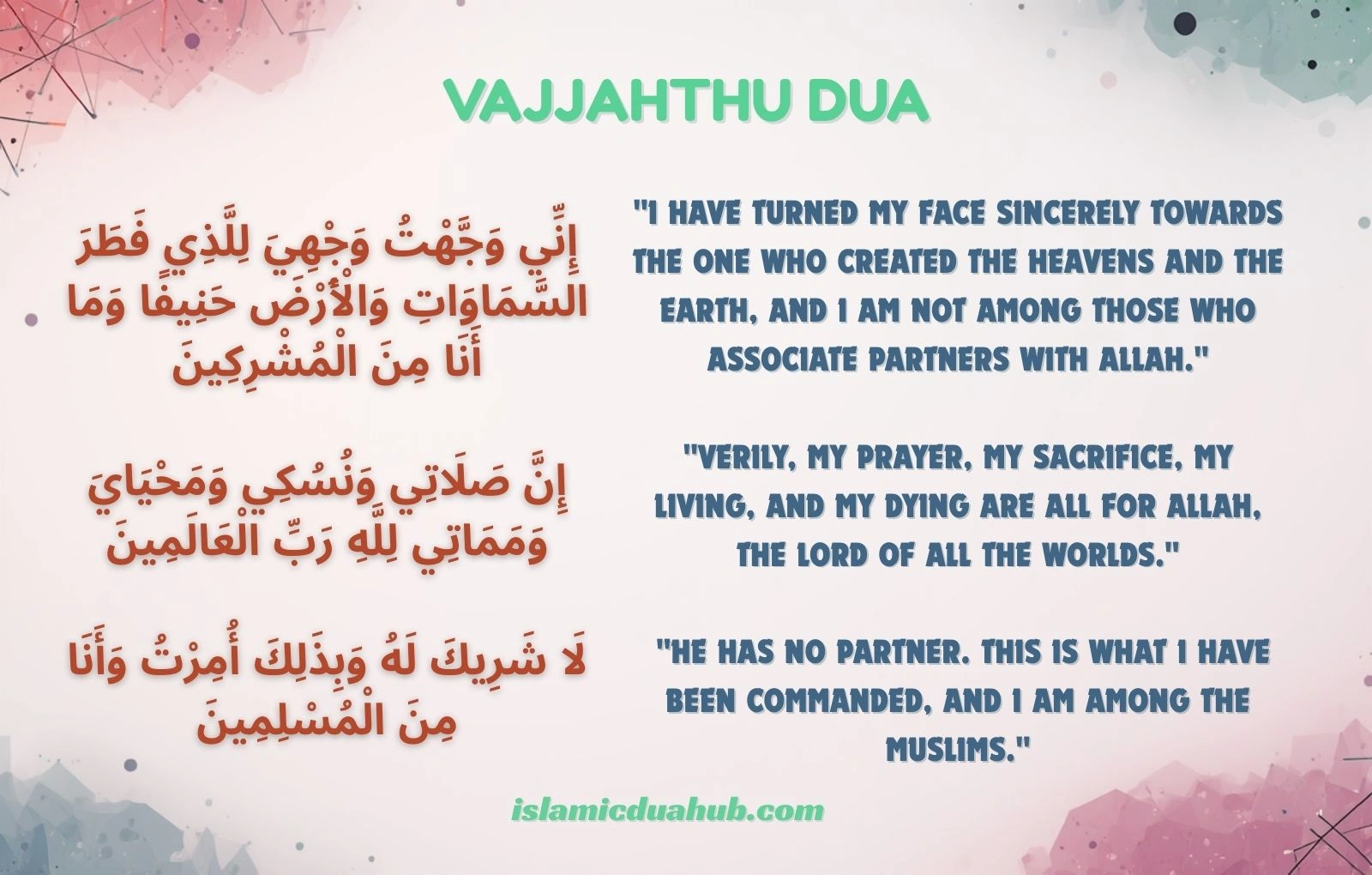
إِنِّي وَجَّهْتُ وَجْهِيَ لِلَّذِي فَطَرَ السَّمَاوَاتِ وَالْأَرْضَ حَنِيفًا وَمَا أَنَا مِنَ الْمُشْرِكِينَ
إِنَّ صَلَاتِي وَنُسُكِي وَمَحْيَايَ وَمَمَاتِي لِلَّهِ رَبِّ الْعَالَمِينَ
لَا شَرِيكَ لَهُ وَبِذَلِكَ أُمِرْتُ وَأَنَا مِنَ الْمُسْلِمِينَ
Transliteration
For those who are learning the dua or need help with pronunciation, here is the easy Roman transliteration:
“Inni wajjahtu wajhiya lil-ladhi fatara as-samawati wal-arda, hanifan wa ma ana minal mushrikeen.
Inna salati wa nusuki wa mahyaya wa mamati lillahi rabbil ‘alameen.
La shareeka lahu wa bidhaalika umirtu wa ana minal muslimeen.”
Vajjahthu Dua Meaning in English
Below is the clear and simple meaning of the Vajjahthu Dua in English:
| Line 1 | “I have turned my face sincerely towards the One who created the heavens and the earth, and I am not among those who associate partners with Allah.” |
| Line 2 | “Verily, my prayer, my sacrifice, my living, and my dying are all for Allah, the Lord of all the worlds.” |
| Line 3 | “He has no partner. This is what I have been commanded, and I am among the Muslims.” |
Vajjahthu Dua in Hindi (हिंदी अर्थ)
हिंदी में इस दुआ का अर्थ इस प्रकार है:
“बेशक मैंने अपना चेहरा उस ذात की तरफ कर लिया जिसने आसमानों और ज़मीन को पैदा किया, एक ऐसे शख्स की तरह जो सीधे रास्ते पर हो, और मैं मुशरिकों में से नहीं हूँ।”
“बेशक मेरी नमाज़, मेरी क़ुर्बानी, मेरी ज़िन्दगी और मेरी मौत सब कुछ अल्लाह के लिए है जो तमाम जहानों का रब है।”
“उसका कोई शरीक नहीं। और मुझे यही हुक्म दिया गया है और मैं मुसलमानों में से हूँ।”
Inni Vajjahthu Dua Meaning in Regional Languages
| Keyword | Meaning (Regional Language Only) |
|---|---|
| inni vajjahthu dua in telugu | నేను నా ముఖాన్ని ఆకాశాలు మరియు భూమిని సృష్టించిన అల్లాహ్ వైపు నిజమైన విశ్వాసంతో తిప్పుకున్నాను. నేను శిర్క్ చేసే వారిలో కాదు. నా నమాజు, నా ఇబాదత్, నా జీవితం మరియు నా మరణం అన్నీ లోకాల ప్రభువైన అల్లాహ్ కొరకే. ఆయనకు భాగస్వామి లేడు. ఇదే నాకు ఆజ్ఞాపించబడింది, మరియు నేను ముస్లింలలో ఒకడిని. |
| vajjahthu dua in arabic malayalam | ഞാന് എന്റെ മുഖം ആകാശങ്ങളും ഭൂമിയും സൃഷ്ടിച്ച അല്ലാഹുവിന്റെ ദിശയിലേക്ക് സത്യവിശ്വാസത്തോടെ തിരിക്കുന്നു. ഞാന് ശിര്ക്കുകാരില് പെട്ടവനല്ല. എന്റെ നമസ്കാരം, എന്റെ ബലി, എന്റെ ജീവിതം, എന്റെ മരണം എല്ലാം ലോകങ്ങളുടെ രക്ഷിതാവായ അല്ലാഹുവിനുവേണ്ടിയാകുന്നു. അവന് പങ്കാളികളില്ല. ഇതാണ് എനിക്ക് കല്പിക്കപ്പെട്ടത്, ഞാന് മുസ്ലിംകളില് ഒരാളാണ്. |
| inni vajjahthu dua in telugu | నేను నా ముఖాన్ని ఆకాశాలు మరియు భూమిని సృష్టించిన అల్లాహ్ వైపు నిజమైన విశ్వాసంతో తిప్పుకున్నాను. నేను శిర్క్ చేసే వారిలో కాదు. నా నమాజు, నా ఇబాదత్, నా జీవితం మరియు నా మరణం అన్నీ లోకాల ప్రభువైన అల్లాహ్ కొరకే. ఆయనకు భాగస్వామి లేడు. ఇదే నాకు ఆజ్ఞాపించబడింది, మరియు నేను ముస్లింలలో ఒకడిని. |
| wajjahtu vajjahthu dua in tamil | நான் என் முகத்தை வானங்களையும் பூமியையும் படைத்த அல்லாஹ்வின் பக்கம் நேர்மையான ஒரே இறைவன் நம்பிக்கையுடன் திருப்புகிறேன். நான் இணை சேர்ப்பவர்களில் ஒருவன் அல்ல. என் தொழுகை, என் பலி, என் வாழ்க்கை, என் மரணம் அனைத்தும் உலகங்களின் இறைவனாகிய அல்லாஹ்விற்கே. அவருக்கு இணை இல்லை. இதுவே எனக்கு கட்டளையிடப்பட்டது; நான் முஸ்லிம்களில் ஒருவன். |
Explanation of the Vajjahthu Dua
What Does This Dua Mean?
The Vajjahthu Dua is a declaration of Tawheed the oneness of Allah. When a Muslim recites these words at the start of Salah, they are openly declaring that they submit entirely to Allah alone. It is a verbal confirmation that the prayer being offered is free from any form of shirk (associating partners with Allah).
The phrase ‘Inni Wajjahtu Wajhiya’ meaning ‘I turned my face’ does not only refer to the physical direction of Qiblah. It means the heart, mind, soul, and entire existence of the believer is now directed toward Allah. This is what makes Salah unique from all other acts.
Its Connection to Sayyidna Ibrahim (AS)
The words of this dua echo the declaration of Sayyidna Ibrahim (AS) as mentioned in Surah Al-An’am (6:79). Allah describes Ibrahim (AS) turning his face entirely toward the Creator of the heavens and earth, free from all forms of polytheism. By reciting this dua, a Muslim follows in the footsteps of Ibrahim (AS) and renews the same commitment.
Source & Reference
This dua is authentically narrated in Sahih Muslim (Hadith No. 771) and other major Hadith collections. It is reported that the Prophet Muhammad (ﷺ) recited this dua when beginning his Salah at night. The Hadith is narrated by Sayyidna Ali ibn Abi Talib (RA).
When to Read the Vajjahthu Dua
The Vajjahthu Dua is recited at a specific and important moment in Salah. Knowing the correct time ensures your prayer follows the Sunnah of the Prophet (ﷺ).
✦ After the opening Takbeer (Allahu Akbar) at the start of Salah
✦ Before reciting Surah Al-Fatiha
✦ Recited silently (not aloud) in all prayers
✦ Commonly recited in Tahajjud, Nawafil, and late-night prayers
✦ Can be recited in all five daily prayers following the Hanafi, Shafi’i, and other madhabs
There is a difference of opinion among Islamic scholars (Ulama) regarding which Dua Istiftah is preferred for the five obligatory prayers. Many Hanafi scholars prefer a shorter supplication for Fard prayers, while the Vajjahthu Dua is more commonly recommended for Nafl and night prayers. However, some scholars hold that it is permissible and rewarding to recite it in any Salah.
It is best to consult a trusted Islamic scholar or follow the practice of your local mosque if you have any doubt.
Benefits of Reciting the Vajjahthu Dua
Reciting the Vajjahthu Dua carries deep spiritual significance. The following benefits are derived from its meaning and from the teachings of the Prophet (ﷺ):
Reaffirmation of Tawheed
Every time a Muslim recites this dua, they reaffirm the core of Islamic belief that Allah alone deserves worship, and no partner exists with Him. This strengthens Iman (faith) with every prayer.
Following the Sunnah of the Prophet (ﷺ)
Reciting this dua is a direct following of the Sunnah. The Prophet (ﷺ) himself recited it. Every act of Sunnah brings reward from Allah and brings the believer closer to the Prophet (ﷺ).
Complete Focus in Salah (Khushu)
The words of this dua stating that ‘my life and death are for Allah’ help the believer focus their heart entirely on the prayer. It removes distracting thoughts and creates spiritual presence in Salah.
Spiritual Cleansing
By declaring freedom from shirk and complete devotion to Allah, the believer enters Salah in a state of spiritual clarity and purity of intention.
Connection with Sayyidna Ibrahim (AS)
Reciting these words creates a spiritual connection with the legacy of Sayyidna Ibrahim (AS), one of the greatest Prophets of Allah, who exemplified complete submission to Allah.
Read Also:
Conclusion
The Vajjahthu Dua is one of the most beautiful supplications in Islamic prayer. Its words carry the very essence of a believer’s relationship with Allah complete submission, sincerity, and the rejection of all forms of shirk. When recited with understanding and presence of heart, it transforms the beginning of every Salah into a powerful spiritual declaration.
The Vajjahthu Dua in Arabic preserves the exact words of the Prophet (ﷺ), and its meaning in English and Hindi ensures that Muslims across the world can connect with it deeply. Whether you are a new Muslim still learning Salah, or someone who has been praying for years, taking a moment to understand and recite the Vajjahthu Dua meaningfully can bring a new level of peace and focus to your prayers.
May Allah accept our prayers, grant us khushu (focus) in Salah, and allow us to follow the Sunnah of the Prophet Muhammad (ﷺ) with sincerity. Ameen.
بِسْمِ اللّٰهِ الرَّحْمٰنِ الرَّحِیْمِ
May Allah accept our prayers and keep us steadfast on the Straight Path.
? Frequently Asked Questions (FAQs)
Q: What is the Vajjahthu Dua?
A: The Vajjahthu Dua, also called Dua Istiftah or the Opening Supplication, is a dua recited silently at the very beginning of Salah, right after the opening Takbeer and before Surah Al-Fatiha. It begins with the words ‘Inni Wajjahtu Wajhiya.’
Q: Is the Vajjahthu Dua mentioned in the Quran?
A: The dua draws its inspiration from the words of Sayyidna Ibrahim (AS) in Surah Al-An’am (6:79), but it is not a Quranic verse recited in Salah. It is a prophetic supplication authentically recorded in Sahih Muslim.
Q: What is the Vajjahthu Dua meaning in English?
A: It means: ‘I have turned my face sincerely toward the One who created the heavens and the earth, and I am not among those who associate partners with Allah. Verily, my prayer, my sacrifice, my living, and my dying are all for Allah, the Lord of all the worlds. He has no partner, and this is what I have been commanded, and I am among the Muslims.’
Q: Can women also recite the Vajjahthu Dua?
A: Yes, both men and women can recite the Vajjahthu Dua in their Salah. There is no gender restriction on reciting this supplication.
Written by: Ahmad Raza
Credentials: Islamic Studies Content Writer
 Read More duas for daily life at The Dua For You