
Debt can feel like a heavy chain around your neck, affecting your peace of mind, relationships, and spiritual well-being. When financial obligations pile up, many Muslims turn to Allah seeking relief through sincere supplication. The qarz utarne ki dua represents a collection of powerful prayers that Prophet Muhammad (peace be upon him) himself taught his companions when they faced similar hardships.
This isn’t about magical solutions or shortcuts. Islamic teachings emphasize combining sincere prayer with honest effort, budgeting, and fulfilling responsibilities. The supplications presented here come directly from authenticated Hadith collections and Quranic verses, offering spiritual support while you work toward financial stability.
What makes these prayers particularly significant? Prophet Muhammad (peace be upon him) once said that if debt worried him, he would specifically make dua about it. This shows that even seeking divine help for worldly matters like finances is a recognized Islamic practice when approached correctly.
The Qarz Ki Dua from Hadith
Primary Qarz Ki Dua
The most authentic and comprehensive qarz se nijat ki dua comes from Sahih Hadith collections. Prophet Muhammad (peace be upon him) taught this to his companion Ali (may Allah be pleased with him):
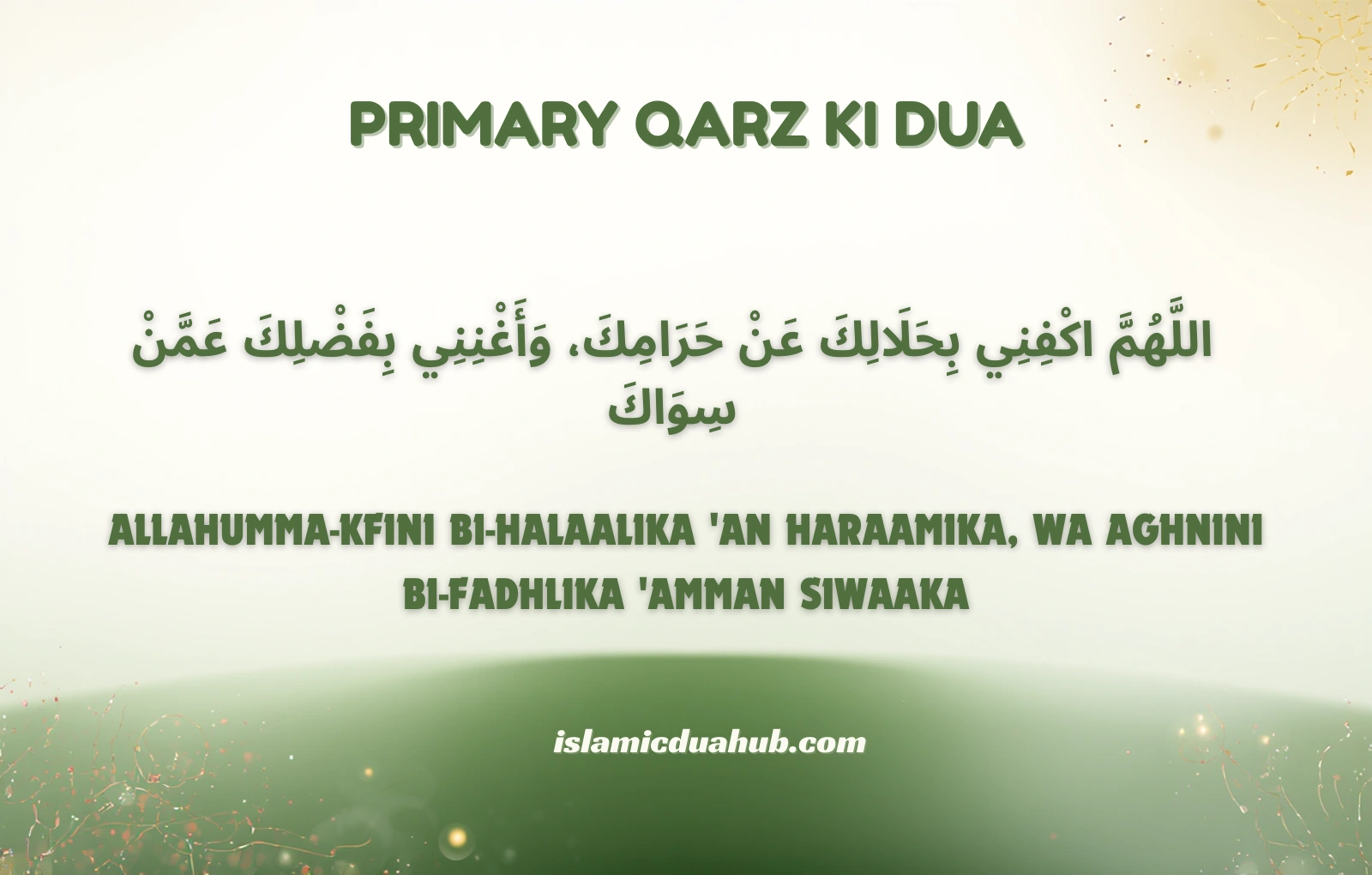
Arabic: اللَّهُمَّ اكْفِنِي بِحَلَالِكَ عَنْ حَرَامِكَ، وَأَغْنِنِي بِفَضْلِكَ عَمَّنْ سِوَاكَ
Transliteration: Allahumma-kfini bi-halaalika ‘an haraamika, wa aghnini bi-fadhlika ‘amman siwaaka
Meaning: “O Allah, make what You have made lawful enough for me, as opposed to what You have made unlawful, and spare me through Your bounty from needing others.”
Source: Reported by Tirmidhi (Hadith 3563) and classified as Hasan.
How to Recite:
- Perform fresh ablution (wudu)
- Pray after any obligatory Salah, particularly Fajr or Tahajjud
- Recite with complete concentration and humility
- Repeat 11, 33, or 100 times daily
- Maintain consistency for at least 40 days
Additional Prayers for Qarz Ki Dua
Dua from Surah Al-Baqarah
While not specifically labeled as a debt prayer, this verse has been recited by scholars for financial relief:
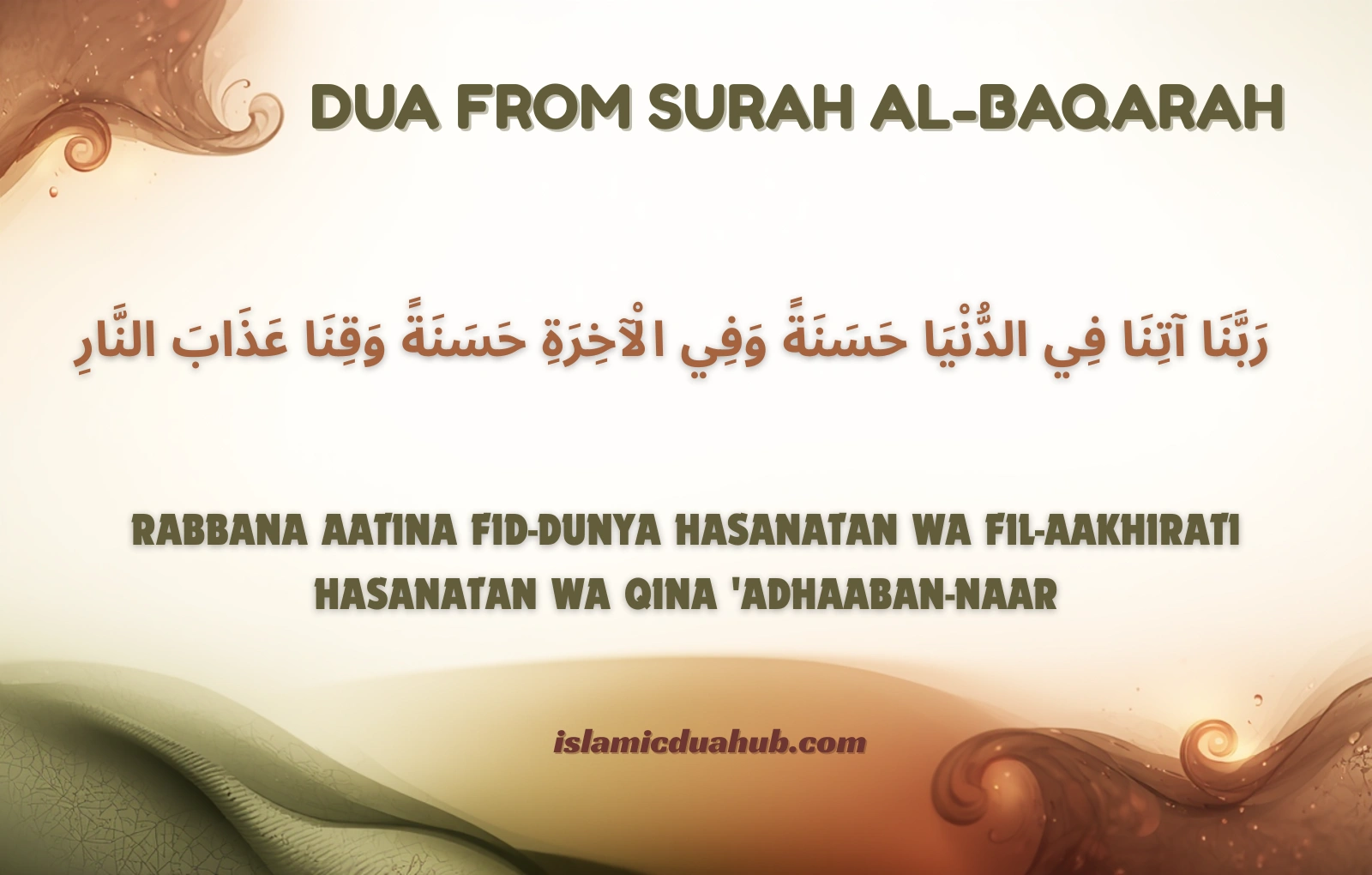
Arabic: رَبَّنَا آتِنَا فِي الدُّنْيَا حَسَنَةً وَفِي الْآخِرَةِ حَسَنَةً وَقِنَا عَذَابَ النَّارِ
Transliteration: Rabbana aatina fid-dunya hasanatan wa fil-aakhirati hasanatan wa qina ‘adhaaban-naar
Meaning: “Our Lord, give us good in this world and good in the Hereafter, and protect us from the punishment of the Fire.”
Source: Quran 2:201
Dua for Relief from Worry and Debt
Prophet Muhammad (peace be upon him) would recite this when distressed:
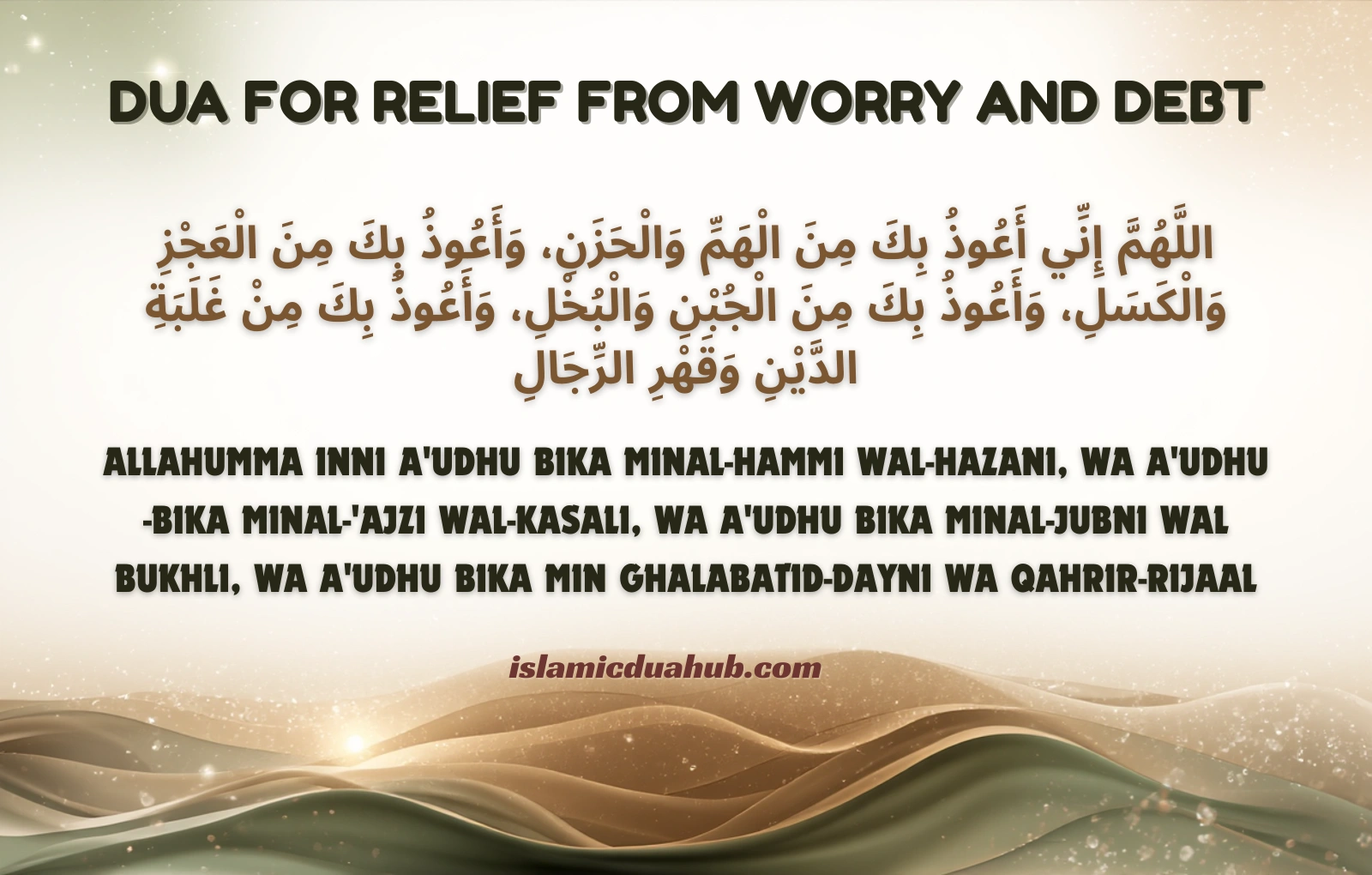
Arabic: اللَّهُمَّ إِنِّي أَعُوذُ بِكَ مِنَ الْهَمِّ وَالْحَزَنِ، وَأَعُوذُ بِكَ مِنَ الْعَجْزِ وَالْكَسَلِ، وَأَعُوذُ بِكَ مِنَ الْجُبْنِ وَالْبُخْلِ، وَأَعُوذُ بِكَ مِنْ غَلَبَةِ الدَّيْنِ وَقَهْرِ الرِّجَالِ
Transliteration: Allahumma inni a’udhu bika minal-hammi wal-hazani, wa a’udhu bika minal-‘ajzi wal-kasali, wa a’udhu bika minal-jubni wal-bukhli, wa a’udhu bika min ghalabatid-dayni wa qahrir-rijaal
Meaning: “O Allah, I seek refuge in You from worry and grief, from helplessness and laziness, from cowardice and miserliness, and from being overcome by debt and overpowered by men.”
Source: Sahih Bukhari (Hadith 6363)
Special Significance: This comprehensive prayer addresses both the spiritual causes (laziness, cowardice) and consequences (debt burden) of financial difficulty.
Qarz Utarne Ka Wazifa
Complete 11-Day Program
This structured approach combines prayer with reflection and action:
Days 1-3: Repentance and Intention
- Perform sincere Tawbah (repentance) for any misuse of wealth
- Recite Astaghfirullah (seeking forgiveness) 100 times after each Salah
- Set clear intention (niyyah) for debt clearance
Days 4-7: Core Supplication
- Recite the main debt relief dua 100 times after Fajr
- Give whatever charity you can, even small amounts
- Review your budget and expenses honestly
Days 8-11: Gratitude and Trust
- Recite Alhamdulillah (praise be to Allah) 100 times
- Maintain complete trust (Tawakkul) in Allah’s plan
- Continue practical steps toward repayment
Practical Steps That Must With Qarz Ki Dua
What Actually Works
1. Create a Written Debt List
- Document every creditor, amount, and due date
- Prioritize by urgency and Islamic ruling (some debts have higher priority)
- Share this list only with trusted advisors if needed
2. Communicate with Creditors
- Islamic teachings encourage transparency about your situation
- Request realistic payment plans
- Never make promises you cannot keep
3. Cut Unnecessary Expenses
- Distinguish between needs and wants strictly
- Temporarily reduce even permissible luxuries
- Redirect saved money toward debt
4. Increase Halal Income
- Seek additional work within your capacity
- Use your skills for side income
- Stay completely within lawful boundaries (no interest-based solutions)
5. Give Sadaqah Despite Hardship
- Even small charity opens doors of provision
- Prophet Muhammad (peace be upon him) said charity never decreases wealth
- Start with whatever you can manage, even a few coins
What Doesn’t Work Alone
- Reciting prayers while avoiding creditors
- Expecting overnight miracles without effort
- Continuing wasteful spending habits
- Taking new debt to pay old debt (debt consolidation with interest)
- Dishonesty about your financial situation
Disclaimer:
This article provides religious guidance and general information. For specific debt situations involving complex financial instruments, business bankruptcies, or legal matters, consult qualified Islamic scholars (muftis) and financial advisors familiar with Shariah-compliant solutions. Individual circumstances vary, and personalized guidance ensures compliance with both Islamic law and local regulations.
Timing and Methods for Maximum Effectiveness
Best Times for Qarz Ki Dua
Highly Recommended:
- Last third of the night (Tahajjud time)
- Between Adhan and Iqamah
- While prostrating in Salah
- After completing obligatory prayers
- On Fridays, especially before Maghrib
- During rain
Special Occasions:
- While fasting (before breaking fast)
- During Ramadan, particularly last 10 nights
- On the Day of Arafah
Conditions for Acceptance
Your dua carries more weight when:
- Earned income is completely halal
- You’ve fulfilled religious obligations (Salah, etc.)
- Your food and clothing come from lawful sources
- You approach Allah with humility, not arrogance
- You believe fully in His ability to help
Common Mistakes to Avoid
Spiritual Errors
1. Making Dua Without Certainty Don’t say “if You want” or doubt Allah’s power. Make dua with conviction that He can and will respond in the best way.
2. Impatience Results may not appear immediately. Prophet Muhammad (peace be upon him) warned that duas are answered unless you become impatient and give up.
3. Continuing Prohibited Practices If your debt stems from haram sources (gambling, interest, etc.), repentance must come before expecting dua acceptance.
4. Neglecting Obligatory Duties Missing Salah or other fard (obligatory) acts while making voluntary duas creates a contradiction.
Practical Errors
1. Relying Only on Prayer Allah helps those who help themselves. Supplication without action shows lack of genuine effort.
2. Borrowing Carelessly Again Clearing one debt then immediately taking another without need repeats the cycle.
3. Hiding from Creditors Islamic ethics demand honesty and good communication even when unable to pay immediately.
Read Also: Athahiyath salath dua Full
What Scholars Say About Debt in Islam
Severity of Debt
Debt is taken seriously in Islamic jurisprudence. The Prophet (peace be upon him) would ask about deceased persons before leading funeral prayer if they had unpaid debts. This emphasizes the grave responsibility of repayment.
A martyr’s sins are forgiven except for debt, according to authentic Hadith. This shows debt is a matter between you and another human, requiring earthly settlement.
Lender’s Responsibilities
Islamic teachings also address creditors:
- Grant respite to those in genuine difficulty (Quran 2:280)
- Forgiving debt brings immense reward
- Harassing struggling debtors is condemned
When Bankruptcy Becomes Permissible
If genuinely unable to repay despite honest efforts, Islamic law provides mechanisms for relief. Consult knowledgeable scholars about your specific situation.
Related Supplications for Financial Well-being
For Increase in Provision
Arabic: رَبِّ إِنِّي لِمَا أَنزَلْتَ إِلَيَّ مِنْ خَيْرٍ فَقِيرٌ
Transliteration: Rabbi inni lima anzalta ilayya min khayrin faqeer
Meaning: “My Lord, I am in absolute need of whatever good You send down to me.”
Source: Quran 28:24 (Dua of Prophet Musa)
For Barakah (Blessing) in Wealth
Arabic: اللَّهُمَّ بَارِكْ لَنَا فِيمَا رَزَقْتَنَا
Transliteration: Allahumma barik lana feema razaqtana
Meaning: “O Allah, bless us in what You have provided for us.”
Usage: Recite when receiving any income or sustenance.
Conclusion
The qarz utarne ki dua combines spiritual reliance on Allah with practical responsibility. These authentic prayers from Quran and Hadith offer powerful support when facing financial burdens, but they must accompany honest effort, ethical conduct, and consistent repayment actions.
Debt relief isn’t about overnight miracles it’s about turning to your Creator with humility while fulfilling your obligations. Recite these verified supplications daily, particularly after Fajr or during Tahajjud. Maintain patience, give charity despite hardship, and communicate honestly with creditors.
Remember that financial difficulty often brings believers closer to Allah. Use this challenge to strengthen your faith, build better habits, and develop the character of a trustworthy Muslim. Whether your debt clears quickly or gradually, trust that every sincere step brings you closer to both financial freedom and spiritual growth. Make dua with complete certainty in Allah’s power, and He will respond in the manner most beneficial for your worldly life and Hereafter.
? FAQs About Qarz Ki Dua
How long should I recite qarz utarne ki dua before seeing results?
Continue for at least 40 days with consistency while actively working on repayment. Allah responds in His perfect timing sometimes immediately, sometimes gradually. Maintain patience and never stop making sincere supplications alongside practical efforts.
Can I recite these prayers if my debt includes interest-based loans?
Yes, but make immediate repentance and work to restructure away from interest (riba). Contact creditors about interest-free payment plans. The dua remains valid, but eliminating prohibited transactions from your financial life is essential.
Is there a specific number of times to recite the debt relief supplication?
Recite 11, 33, or 100 times daily. The number 100 is commonly mentioned in Hadith. Choose what you can maintain consistently. Sincerity and focus matter more than quantity.
Should I tell my creditors I’m making dua for debt relief?
Share your concrete repayment plans with creditors, but keep your worship private. Be transparent about your financial situation and difficulties, but spiritual practices remain between you and Allah.
Can women recite qarz ki dua during menstruation?
Yes. Making dua doesn’t require ritual purity. Women can recite all these supplications during menstruation or postnatal bleeding without any restriction.
What if my debt is to family members?
Family debts hold equal or greater importance in Islam. Be honest about timelines, maintain respectful communication, and don’t take advantage of family generosity. These duas apply equally to all debts.
Are there specific surahs to recite along with these prayers?
Surah Al-Waqiah (Chapter 56) for provision, Ayat Al-Kursi for barakah, and Surah Al-Mulk for overall blessings are beneficial. These supplement, not replace, the main debt-relief supplications.
How can I know if my dua is being accepted?
Signs include unexpected help, increased ease in finding halal income, creditor patience, or inner peace despite circumstances. Sometimes Allah grants wisdom and patience rather than immediate money. Trust His response is best for you.
Written by: Ahmad Raza
Credentials: Islamic Studies Content Writer
 Read More duas for daily life at The Dua For You