
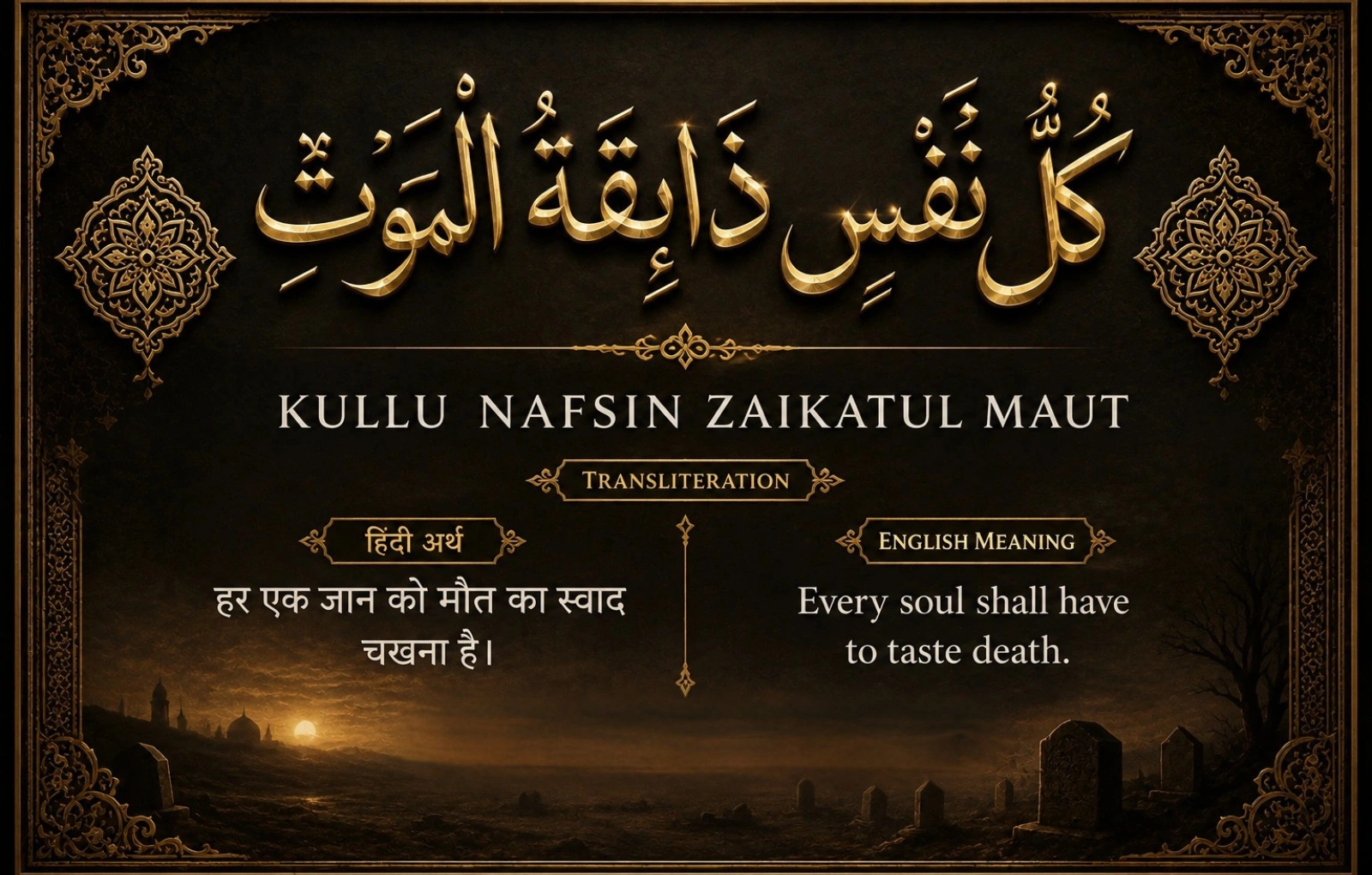
“Kullu Nafsin Zaikatul Maut” is one of the most profound phrases in the Holy Quran. Every Muslim has heard it, and many recite it when someone passes away. Yet its depth goes far beyond a simple statement about death.
This phrase means “Every soul will taste death.” The Kullu Nafsin Zaikatul Maut text appears not once but three times in the Quran, which shows how important this truth is in Islam. Allah (SWT) repeated it in three different Surahs so that every believer would truly reflect on it.
Kullu Nafsin Zaikatul Maut meaning in Hindi is “हर जान को मौत का मज़ा चखना है,” which means every living soul must taste death. Reflecting on this reminds a Muslim that this world is temporary and pushes the believer to focus on building a strong connection with Allah and preparing for the Hereafter.
Kullu Nafsin Zaikatul Maut In Arabic Text
The phrase that opens each of the three ayat is:
كُلُّ نَفْسٍ ذَائِقَةُ الْمَوْتِ
Hindi Transliteration:
कुल्लु नफ्सिन ज़ाइक़तुल मौत।
Kullu Nafsin Zaikatul Maut in Arabic text is written exactly as shown above. This Kullu Nafsin Zaikatul Maut verse in Arabic is built from four key words, each carrying deep meaning on its own.
Word By Word Meaning Of The Arabic Text
Kullu (كُلُّ)
This word means “every” or “all.” There are absolutely no exceptions. No person, no creation, no being on this earth is left out.
Nafsin (نَفْسٍ)
This means “soul” or “self.” It refers to the conscious being inside every living person, the self that feels and experiences.
Zaikatul (ذَائِقَةُ)
This comes from the Arabic root “Zawq,” meaning “to taste.” The soul does not simply end at death. It tastes death, telling us that death is an experience the soul passes through before moving to what comes next.
Al-Maut (الْمَوْتِ)
This means “death,” the cessation of biological life on this earth.
Together, Kullu Nafsin Zaikatul Maut Meaning In English Translates as:
“Every soul will taste death.”
And Kullu Nafsin Zaikatul Maut in Urdu means:
“ہر جاندار کو موت کا مزہ چکھنا ہے۔”
Kullu Nafsin Zaikatul Maut Full Ayat In All Three Surahs
This statement appears in three places in the Holy Quran. Each full ayat carries a slightly different message while sharing the same opening truth.
Ayat 1: Surah Al-Imran (3:185)
Kullu Nafsin Zaikatul Maut Surah Name: Surah Al-Imran, Verse 185
Arabic Text:
كُلُّ نَفْسٍ ذَائِقَةُ الْمَوْتِ ۗ وَإِنَّمَا تُوَفَّوْنَ أُجُورَكُمْ يَوْمَ الْقِيَامَةِ ۖ فَمَن زُحْزِحَ عَنِ النَّارِ وَأُدْخِلَ الْجَنَّةَ فَقَدْ فَازَ ۗ وَمَا الْحَيَاةُ الدُّنْيَا إِلَّا مَتَاعُ الْغُرُورِ
Roman Transliteration:
Kullu nafsin za’iqatul mawt, wa innamaa tuwaffawna ujoorakum yawmal-qiyaamah, faman zuhziha ‘anin-naari wa udkhilal-jannata faqad faaz, wa mal-hayaatud-dunyaa illaa mataa’ul-ghuroor.
Hindi Transliteration:
कुल्लु नफ्सिन ज़ाइक़तुल मौत, व इन्नमा तुवफ्फ़ौना उजूरकुम यौमल क़ियामह, फ़मन ज़ुह्ज़िह़ अनिन्नारि व उद्ख़िलल जन्नता फ़क़द फ़ाज़, व मल हयातुद्दुन्या इल्ला मता-उल ग़ुरूर।
English Meaning:
“Every soul will taste death, and only on the Day of Resurrection will you be given your full reward. Whoever is saved from the Fire and admitted to Paradise will have truly succeeded. The life of this world is nothing but the enjoyment of delusion.”
Hindi Meaning:
हर जान को मौत का मज़ा चखना है। और तुम्हें तुम्हारे पूरे बदले क़यामत के दिन दिए जाएंगे। जो शख्स जहन्नम से बचा लिया गया और जन्नत में दाखिल कर दिया गया, वही कामयाब हुआ। और दुनिया की ज़िंदगी धोखे के सामान के सिवा कुछ नहीं।
Urdu Meaning:
ہر جاندار کو موت کا مزہ چکھنا ہے، اور تمہیں تمہارے اعمال کا پورا بدلہ قیامت کے دن دیا جائے گا۔ جو جہنم سے بچا لیا گیا اور جنت میں داخل کر دیا گیا وہی کامیاب ہوا۔ اور دنیا کی زندگی دھوکے کے سامان کے سوا کچھ نہیں۔
Ayat 2: Surah Al-Anbiya (21:35)
Kullu Nafsin Zaikatul Maut Surah Name: Surah Al-Anbiya, Verse 35
Arabic Text:
كُلُّ نَفْسٍ ذَائِقَةُ الْمَوْتِ ۗ وَنَبْلُوكُم بِالشَّرِّ وَالْخَيْرِ فِتْنَةً ۖ وَإِلَيْنَا تُرْجَعُونَ
Roman Transliteration:
Kullu nafsin za’iqatul mawt, wa nablookum bish-sharri wal-khayri fitnah, wa ilaynaa turja’oon.
Hindi Transliteration:
कुल्लु नफ्सिन ज़ाइक़तुल मौत, व नब्लूकुम बिश्शर्रि वल्ख़ैरि फ़ित्नह, व इलैना तुर्जउन।
English Meaning:
“Every soul will taste death. We test you with evil and with good as a trial. And to Us you will be returned.”
Hindi Meaning:
हर जान को मौत का मज़ा चखना है। और हम तुम्हें बुराई और भलाई से आज़माते हैं, फिर हमारी तरफ ही तुम लौटाए जाओगे।
Urdu Meaning:
ہر جاندار کو موت کا مزہ چکھنا ہے، اور ہم اچھے اور بُرے حالات میں ڈال کر تم سب کی آزمائش کر رہے ہیں، آخرکار تمہیں ہماری ہی طرف پلٹنا ہے۔
Ayat 3: Surah Al-Ankabut (29:57)
Kullu Nafsin Zaikatul Maut Surah Name: Surah Al-Ankabut, Verse 57
Arabic Text:
كُلُّ نَفْسٍ ذَائِقَةُ الْمَوْتِ ۖ ثُمَّ إِلَيْنَا تُرْجَعُونَ
Roman Transliteration:
Kullu nafsin za’iqatul mawt, thumma ilaynaa turja’oon.
Hindi Transliteration:
कुल्लु नफ्सिन ज़ाइक़तुल मौत, सुम्मा इलैना तुर्जउन।
English Meaning:
“Every soul will taste death. Then to Us you will be returned.”
Hindi Meaning:
हर जान को मौत का मज़ा चखना है। फिर हमारी ही तरफ तुम लौटाए जाओगे।
Urdu Meaning:
ہر جاندار کو موت کا مزہ چکھنا ہے۔ پھر تم سب ہماری طرف لوٹائے جاؤ گے۔
Why Does This Ayat Appear Three Times In The Quran?
Allah (SWT) does not repeat without purpose. Each time this ayat appears, it carries a different lesson alongside the shared truth of death.
In Surah Al-Imran, it follows a reminder that this world is a delusion. The real reward comes on the Day of Judgement, and the true success is entering Jannah.
In Surah Al-Anbiya, it is paired with the reality of trials. Life on earth is a test, and every person faces both good and difficult times as part of that test.
In Surah Al-Ankabut, it is brief and direct, followed only by the reminder that all of us will return to Allah.
Together, the three appearances tell a complete story: death is certain, this world is a test, and every soul will ultimately return to its Creator. Whether reading the Kullu Nafsin Zaikatul Maut verse in Arabic or reading its Kullu Nafsin Zaikatul Maut in English translation, the message carries equal weight for every believer.
Explanation And Spiritual Importance
This ayat is not only about dying. It is about living with awareness.
Many Muslims recite this phrase when hearing of someone’s passing. It brings the heart back to the reality that no matter how long a person lives, or how much wealth or status they hold, death will come to them as well.
The Prophet Muhammad (peace be upon him) advised believers to remember death often. He said:
أَكْثِرُوا ذِكْرَ هَاذِمِ اللَّذَّاتِ
“Remember often the destroyer of pleasures, which is death.” (Sunan Ibn Majah, 4258)
A person who keeps the reality of death in their heart will not be enslaved by the love of this world. They will value their time more, seek forgiveness more often, and strive to perform good deeds consistently.
When To Recite And Reflect On This Ayat
There is no fixed time for reciting this as it is a Quranic ayat rather than a specific supplication. However, Muslims commonly reflect upon it in the following situations.
Upon Hearing Of Someone’s Death
When a Muslim is informed of another person’s death, it is Sunnah to say “Inna lillahi wa inna ilayhi rajioon.” Reflecting on this ayat at that moment brings a powerful reminder of the same inevitable reality.
While Visiting A Cemetery
Visiting graves is recommended in Islam as it reminds the living of their own mortality. Reciting this ayat during a cemetery visit deepens that reflection.
During Times Of Grief And Loss
When a loved one passes away, this ayat gives comfort. It reminds the grieving heart that this separation was always part of Allah’s plan and that reunion in the Hereafter remains the believer’s true hope.
In Daily Reflection And Worship
Making it a habit to reflect on this ayat regularly keeps a Muslim grounded. It prevents pride and attachment to worldly things and strengthens the focus on the Hereafter.
Benefits Of Reflecting On This Ayat
It Builds True Humility
Remembering that every single soul will taste death removes arrogance from the heart. No person, regardless of wealth, position, or status, can escape this truth.
It Reduces Love Of This World
The Quran in Surah Al-Imran verse 185 describes this life as “the enjoyment of delusion.” Keeping this reality in mind helps a believer avoid becoming overly attached to material things that will all be left behind.
It Increases Good Deeds
When a person knows that time is limited and accountability is coming, they naturally strive to do more good. Salah, Sadaqah, helping others, and seeking forgiveness all increase when a person truly reflects on death.
It Provides Comfort During Hardship
When a believer faces suffering and remembers that everything is a test and that they will return to Allah, it gives them patience and inner peace.
It Keeps The Focus On The Hereafter
The real goal of a Muslim’s life is not worldly success but success in the next life. This ayat constantly redirects that focus, keeping the believer on the right path.
It Strengthens Tawakkul In Allah
Knowing that life and death are entirely in Allah’s hands builds complete trust and reliance on Him. A believer does not fear death as an ending but as a transition to a better and eternal life.
Conclusion
“Kullu Nafsin Zaikatul Maut” is among the most profound truths in the entire Holy Quran. Its message is simple yet life-changing: every soul will taste death, regardless of who they are or what they possess.
Allah (SWT) placed this reminder three times in His Book because the human heart is quick to forget. We get busy with this world, chasing its pleasures and worrying about its problems, and we forget that all of it will end.
May Allah (SWT) grant every Muslim the wisdom to reflect deeply on this ayat, the strength to prepare well for the Hereafter, and the mercy to be among those who are saved from the Fire and admitted into Jannah. Ameen.
 Read Also These Trusted Islamic Duas:
- Imtihan Mein Kamyabi Ki Dua
- Sawari Ki Dua
- Dua Abu Darda
- Dua Lahaula Walakuata Illabillah Meaning
- Dua For Good Health
- Pani Peene Ki Dua
- Barkat Ki Dua
- Suhoor Dua
- Tahajjud Ki Dua
- Surma Lagane Ki Dua
- Hasbi Allah Dua
- Sana Dua In Namaz Hindi
- Dua E Mujeer
- Lailatul Qadr Ki Dua
- Nazar Ki Dua By Prophet
? Frequently Asked Questions
What is Kullu Nafsin Zaikatul Maut meaning in English?
It means “Every soul will taste death.” This Quranic phrase affirms that death is certain for all living beings without any exception.
What is Kullu Nafsin Zaikatul Maut meaning in Hindi?
The meaning in Hindi is “हर जान को मौत का मज़ा चखना है,” which means every living soul must experience death.
What is the Kullu Nafsin Zaikatul Maut surah name?
This ayat appears in three Surahs: Surah Al-Imran (verse 185), Surah Al-Anbiya (verse 35), and Surah Al-Ankabut (verse 57).
How many times does this ayat appear in the Quran?
The phrase appears exactly three times in the Holy Quran, each time in a different Surah and followed by a different continuation.
What is the Kullu Nafsin Zaikatul Maut full ayat in Surah Al-Ankabut?
The full ayat in Surah Al-Ankabut (29:57) is: كُلُّ نَفْسٍ ذَائِقَةُ الْمَوْتِ ۖ ثُمَّ إِلَيْنَا تُرْجَعُونَ, meaning “Every soul will taste death. Then to Us you will be returned.”
What does the word Zaikatul mean in Arabic?
Zaikatul comes from the root “Zawq,” which means “to taste.” It tells us that the soul experiences death as a transition, not a simple ending.
What is the Kullu Nafsin Zaikatul Maut meaning in Urdu?
Kullu Nafsin Zaikatul Maut in Urdu means “ہر جاندار کو موت کا مزہ چکھنا ہے,” which tells us that every living being must experience death without exception.
Where can I read the Kullu Nafsin Zaikatul Maut text?
The Kullu Nafsin Zaikatul Maut text appears in Surah Al-Imran (3:185), Surah Al-Anbiya (21:35), and Surah Al-Ankabut (29:57) of the Holy Quran.
Written by: Ahmad Raza
Credentials: Islamic Studies Content Writer
Read More duas for daily life at Instant Dua